Conservation-grade cleaning · Chicago & North Shore

Rug Cleaning in Chicago — Persian, Oriental & Area Rugs

Cold-water hand washing for Persian, oriental, antique, and modern rugs across Chicago and the North Shore. Dye-tested before every wash, dried flat, never steamed — the method Ghorban Ahmadi refined while performing conservation work for the State Hermitage Museum, the Musée du Louvre, and the British Museum.

Text (847) 440-1349 — estimate within 30 minutes during workshop hours.

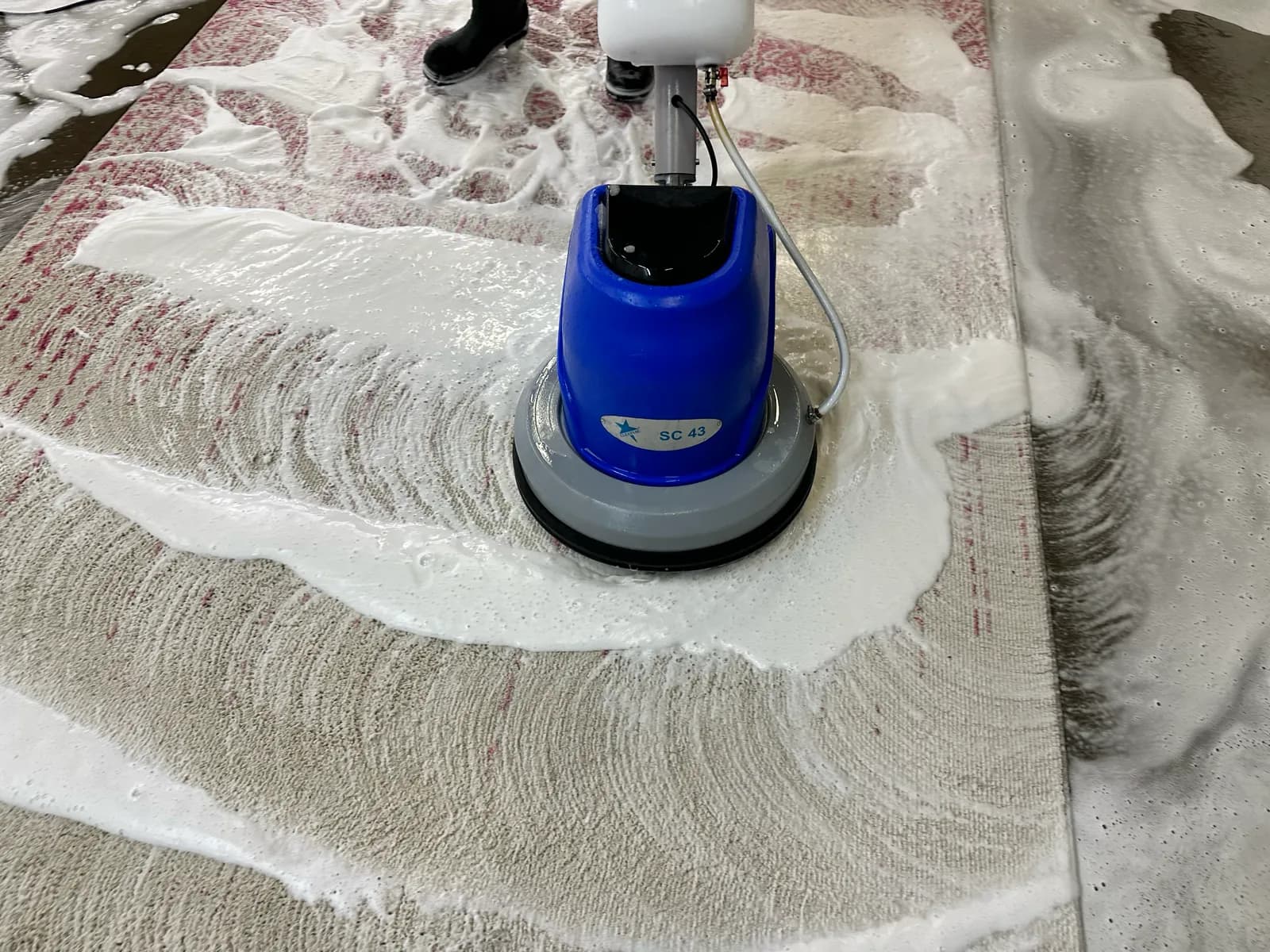
Hand washing a wool rug with suds at the Ahmadi Rug workshop in Skokie, Illinois
Free insured pickup

Free insured pickup from Chicago, the North Shore, and surrounding suburbs

We collect your rug, hand-wash it, and deliver it back wrapped and groomed — pickup and delivery are always free and fully insured. Choose your area for local detail, or call (847) 440-1349 to schedule.

Across the city

Chicago neighborhoods we serve

Free insured pickup covers the whole city, not just the North Shore. On the North Side we collect from Lincoln Park, Lakeview, North Center, Ravenswood, Andersonville, and Edgewater; downtown from the Gold Coast, Streeterville, and the West Loop; and on the South Side from Hyde Park.

Wherever you are in Chicago, the service is the same: we roll and wrap the rug in your home, bring it to our Skokie workshop for hand washing, and deliver it back — pickup and delivery free and insured. If your neighborhood isn’t named here, call (847) 440-1349 and we will confirm a pickup day.

Prefer to drop off?

Skokie & St. Charles

Every rug is cleaned at our Skokie workshop. Rugs left in St. Charles are brought to Skokie, cleaned, and returned there for collection.

  • Skokie — Main Workshop

    7300 N Lawndale Ave, Skokie, IL 60076

    • Mon–Fri: 8:00 AM – 5:00 PM
    • Saturday: 9:00 AM – 3:00 PM
    • Sunday: Closed

    (847) 440-1349

  • St. Charles — Drop-Off

    615 S Randall Rd Ste 104, St. Charles, IL 60174

    Monday–Saturday, 9 AM–5 PM · by appointment only

    (847) 641-3185St. Charles details →

What rug cleaning actually involves

Rug cleaning in Chicago is too often sold by a rug cleaning company as a quick steam pass on the living-room floor. A hand-knotted rug needs the opposite: it has to come off the floor and through a controlled, five-step conservation process, because the pile is protein fiber, the foundation is under tension, and the dyes — on anything older — are fugitive. Here is exactly what we do, and what the wrong method does instead.

In workshop order, every rug goes through dusting, pre-spot treatment, the wash, rinse, water extraction, drying, fringe, and a final quality check — after an intake inspection and dye test, and grouped into the five stages below.
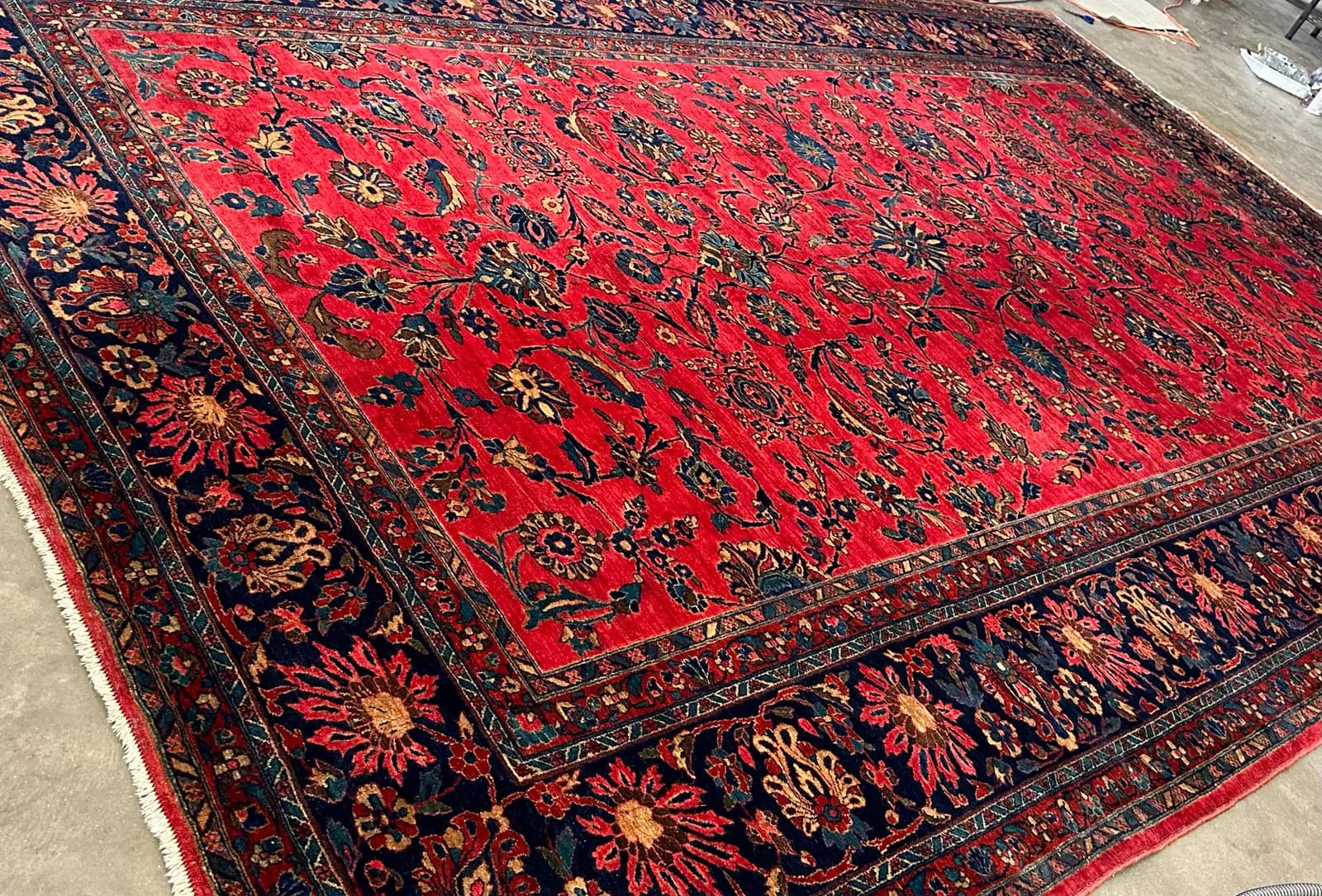
Antique Persian rug laid flat for inspection and measuring before cleaning — Ahmadi Rug, Chicago
01

Pre-inspection & dye-stability test

Every rug is logged, photographed front and back, and measured before a drop of water touches the pile. We then run a dye-stability test — dampening a hidden corner under neutral water, then under a mild acidic and a mild alkaline solution — to see whether any color lifts onto the swab.

Why it matters: anything woven before about 1950 is dyed with natural dyes set by metallic mordants. Those dyes are fugitive — they run if they meet the wrong pH or temperature. Testing first is the difference between a wash and a ruined heirloom.

The wrong method: a truck-mounted carpet cleaner skips this entirely and pushes hot detergent into an untested rug. By the time red bleeds into ivory, the migration is already set.
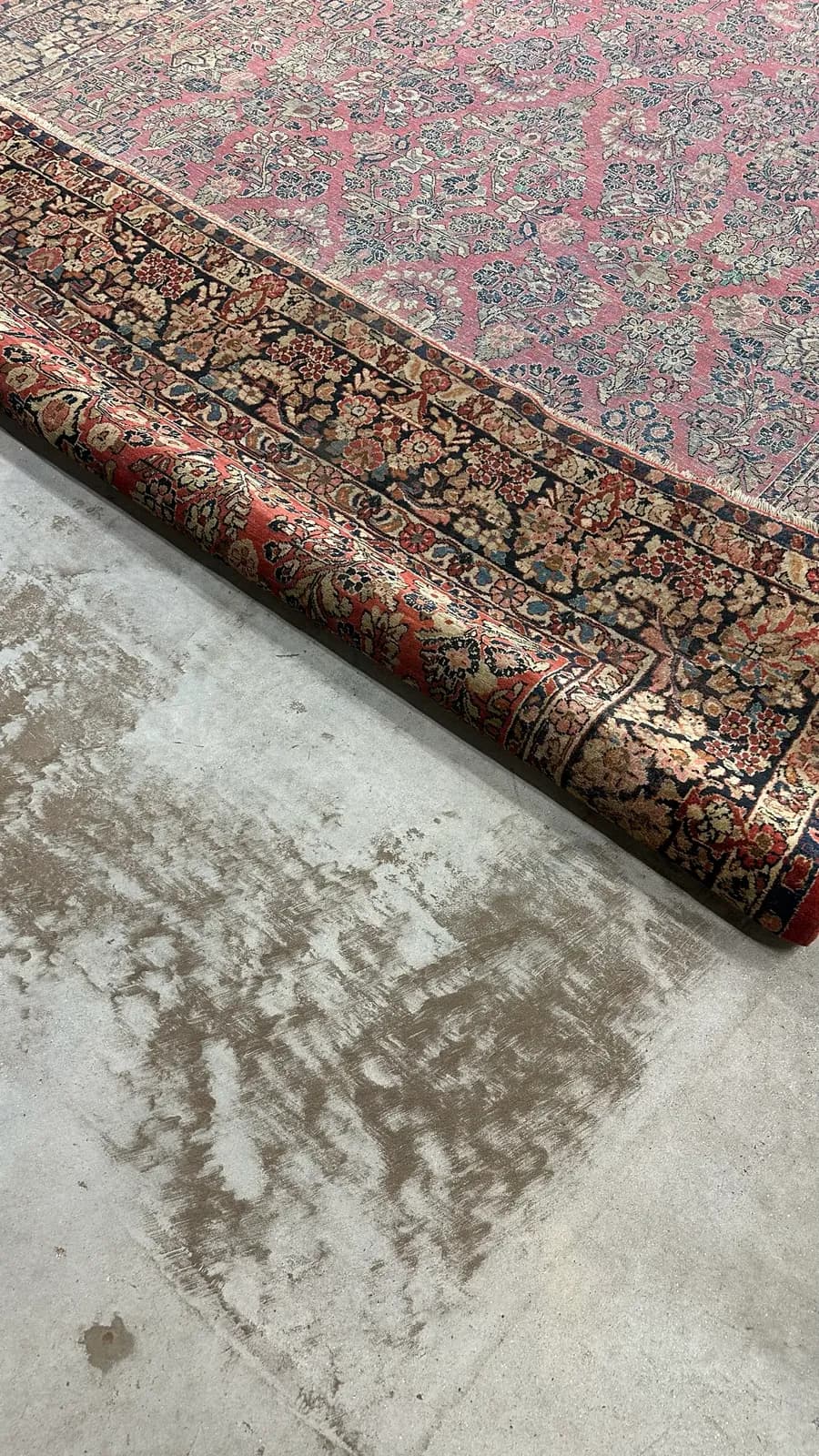
Dry soil and grit lifted from an oriental rug before washing — Ahmadi Rug workshop, Skokie IL
02

Dusting & pre-spot treatment

Before any water, embedded dry soil is driven out mechanically with compressed air and controlled agitation while the rug lies face-down over a grid. A single soiled rug can hold several pounds of fine grit deep in the foundation. Once the grit is out, individual spots and stains are pre-treated so the wash itself can lift them.

Why it matters: most of the wear in a hand-knotted rug is abrasion — sharp grit sawing against wool fibers every time someone walks across it. Removing that grit dry, before it turns to abrasive mud in water, is the step that actually preserves the pile.

The wrong method: a household vacuum only lifts surface lint. Wet-cleaning over trapped grit grinds it deeper and accelerates the very wear you paid to prevent.
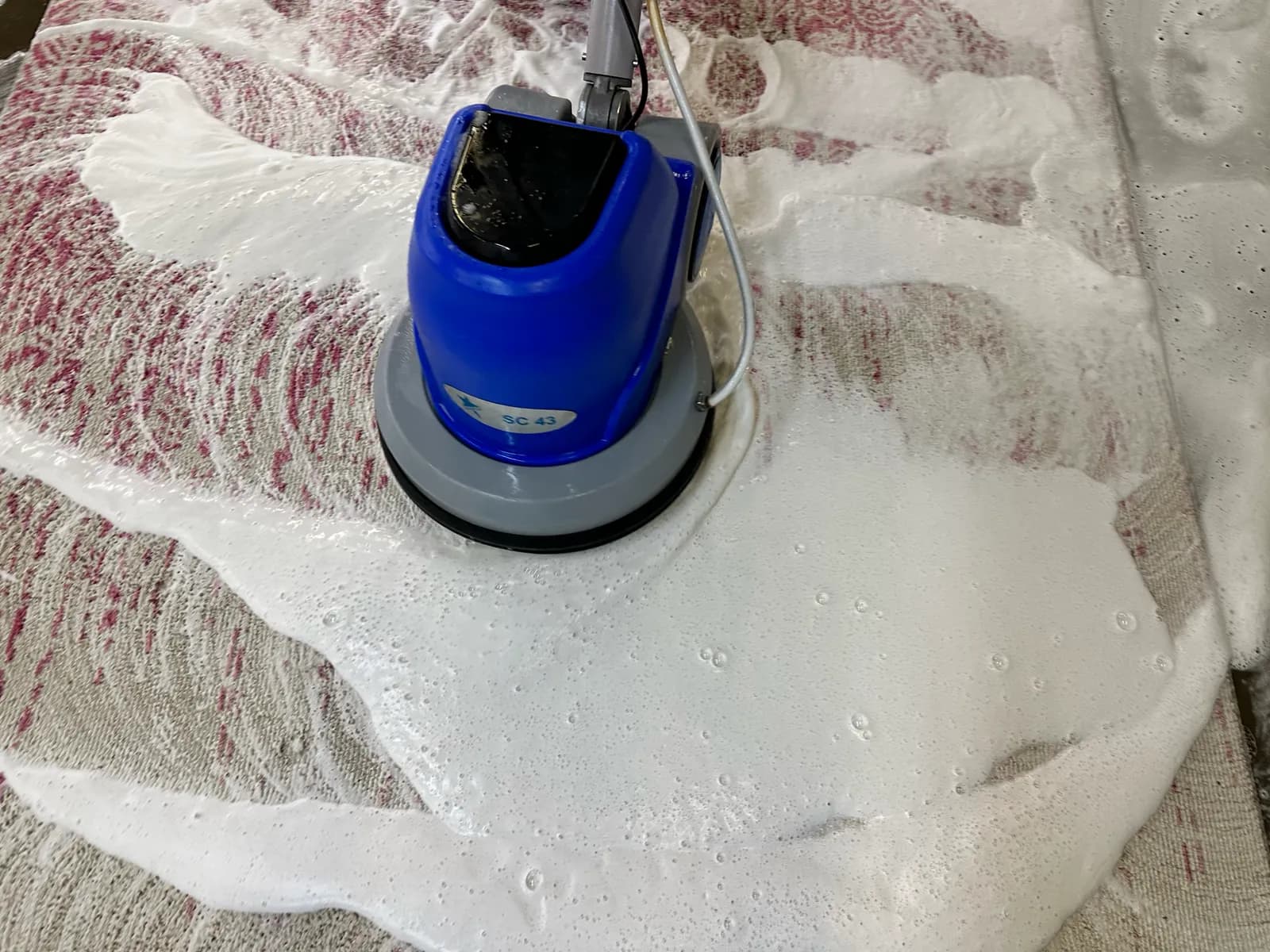
Suds worked through the pile during cold-water hand washing — Ahmadi Rug, Chicago
03

Hand washing — pit wash or flat wash

We use two wash methods and choose per rug. Sturdy wool rugs go into the pit wash — full immersion, so the bath reaches the foundation. Silk, fragile, and dye-bleed-risk rugs are flat-washed instead, worked by hand on the floor without immersion. Either way the chemistry is non-ionic and pH-neutral, matched to the fiber and dye; water is kept cool — never above roughly 85°F for wool — and the pile is worked in the direction of the nap.

Why it matters: wool and silk are protein fibers. Heat felts and shrinks them, and alkaline detergent strips the lanolin that gives wool its luster and resilience. Cool water and neutral chemistry clean the rug without damaging the fiber — the same principle museum textile conservators work by.

The wrong method: hot-water extraction at high alkalinity is built for synthetic wall-to-wall carpet. On a hand-knotted wool rug it causes felting, dulling, and dye migration that no amount of re-cleaning reverses.
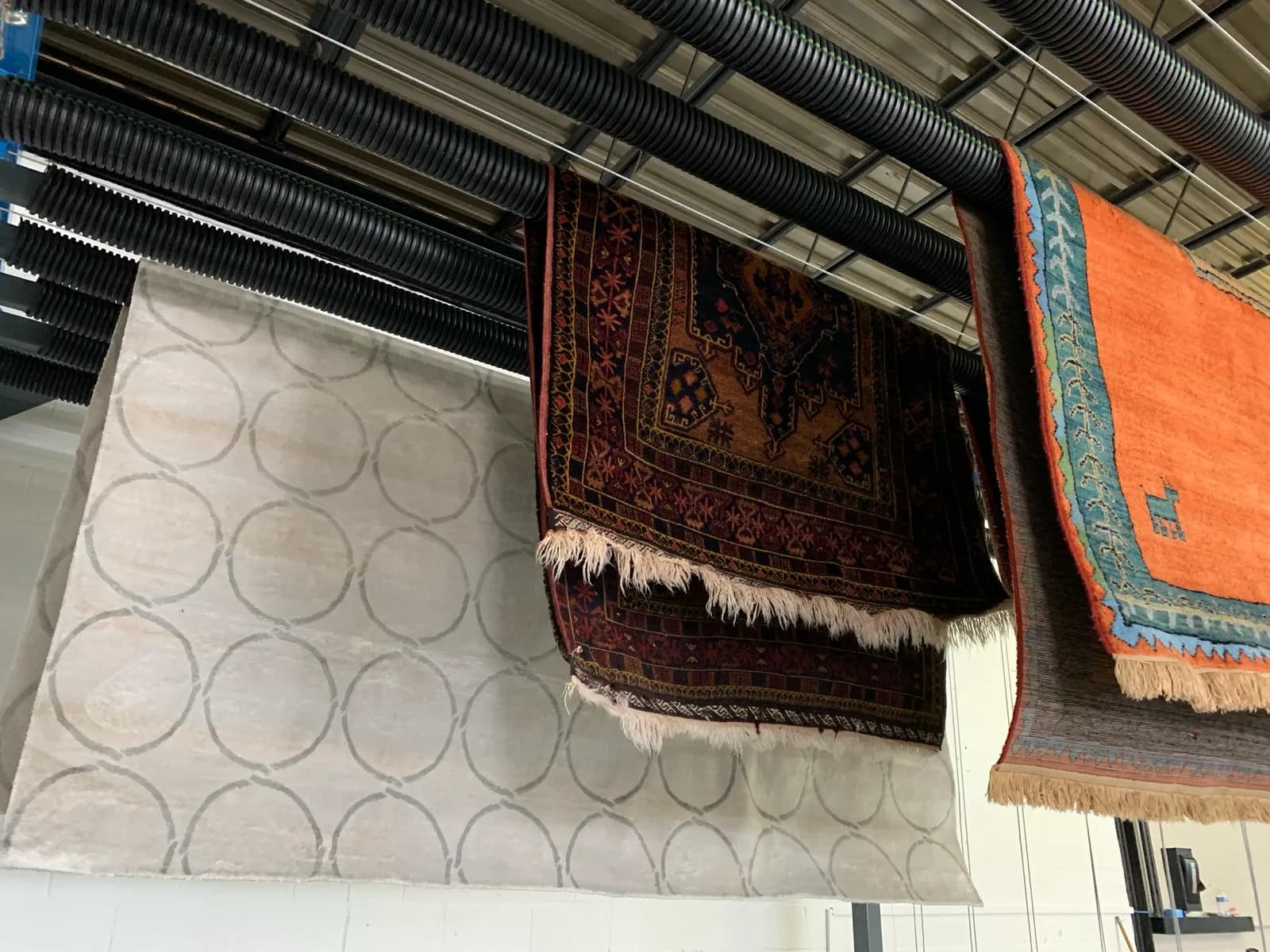
Hand-washed rugs drying flat on racks under controlled airflow — Ahmadi Rug workshop, Skokie IL
04

Rinse, extraction & controlled drying

The rug is rinsed until the water runs clear, then excess water is gently extracted. It is dried flat — out of direct sun — on racks with managed airflow, typically over 48 to 72 hours depending on thickness and fiber. No tumble dryers, no heat lamps, no hanging a saturated rug over a rail; silk in particular is never hung wet.

Why it matters: a wet foundation under tension distorts. Dry a rug flat and even and it returns to square; dry it fast or hung and the cotton warps lift, the rug goes out of shape, and trapped moisture invites mildew. Patience here protects the geometry of the weave.

The wrong method: same-day "dry in an hour" services trap moisture in the foundation. Within a week the homeowner smells mildew and the rug has cupped at the edges.
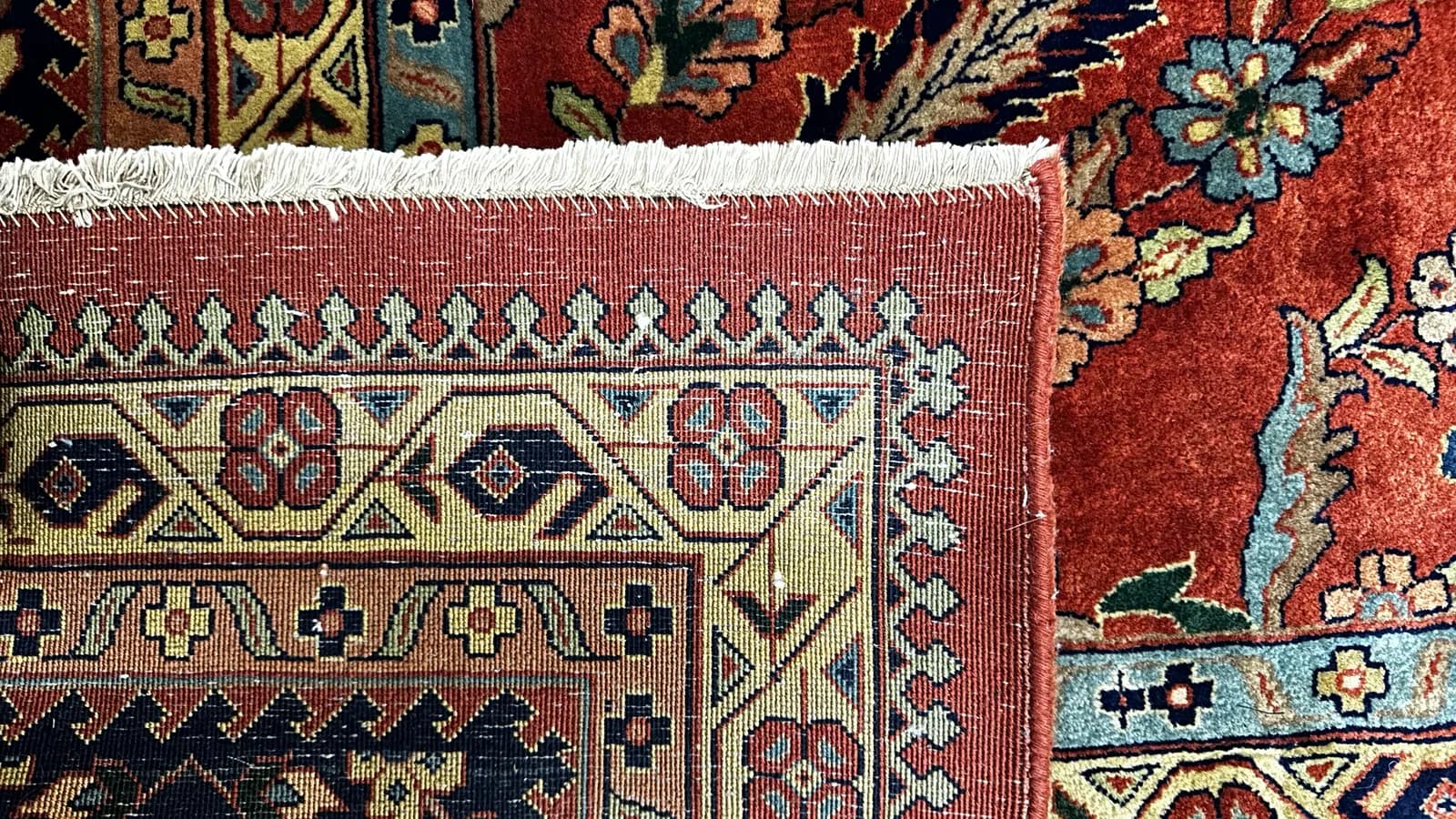
Final inspection of a cleaned Persian rug’s pile and foundation before delivery — Ahmadi Rug, North Shore
05

Fringe, final inspection & delivery

Once dry, the fringes are combed straight and the pile is groomed to lie correctly. In final quality control every rug is moisture-metered and must read under 12% before it is wrapped for delivery, and it is checked against its intake photographs. You receive the rug back with that photo record, and we flag anything we noticed — a loose selvage, early moth activity, a thin spot — so nothing is a surprise.

Why it matters: the final pass is also a free condition report from a conservator. Catching a fraying edge or a moth trail early is the difference between a $120 repair and a $1,200 reweave.

The wrong method: a rug returned rolled, damp, and un-inspected hides the problems that cleaning should have surfaced.

“The rugs we see with irreversible steam damage almost always arrived looking clean on the surface. The damage was underneath, in the foundation, from heat and pressure no one can undo.”
— Ahmadi Rug workshop, Skokie

Want a number before you call? Use our rug cleaning cost calculator to estimate your job by fiber type and dimensions, or read our complete rug care guide for everything that happens between professional cleanings.

Hand-washing vs. steam cleaning: what actually happens to the rug

Most of the rug damage we see traces back to the wrong method being applied to a hand-knotted piece, not to age or ordinary wear. The difference between our process and a typical steam or hot-water extraction pass comes down to three variables.

Based on the process described above and the equipment standard to volume carpet cleaning.

FactorAhmadi RugSteam / hot-water extraction
Water temperatureCool — never above roughly 85°F for woolHot — typically 150°F+
ChemistrypH-neutral, non-ionic, matched to fiber and dyeAlkaline detergent built for synthetic carpet
Dye-stability test before washingEvery rug, every colorNot standard practice
Dry soil removed before water touches the pileYes — compressed air, face-down agitationNo — soil is wet down first
How the rug is washedOff the floor — pit wash for sturdy wool, flat wash for silk and fragile rugsIn place, on the floor
DryingFlat on racks, 48–72 hours, controlled airflowLeft damp in place, or same-day "dry"

Heat and alkalinity are the two variables that matter most. Wool felts — the fiber scales lock together into a matted, coarse pile that cannot be reversed — when heat and agitation combine with a high-pH detergent. Natural dyes are similarly sensitive: the mordants that bind them to the fiber hold best in a mildly acidic to neutral range, and an alkaline bath is exactly the condition that lets one color migrate into another.

What makes a hand-knotted rug different from every other textile in your home

A hand-knotted Persian or Oriental rug is not a floor covering in the way wall-to-wall carpet is. Every knot — anywhere from around a hundred to well over a thousand per square inch, depending on the weave — is individually tied by hand around the warp threads that, together with the weft, form the rug’s foundation. That structure is why the process above looks the way it does.

Wool is hygroscopic — it can absorb roughly a third of its own weight in water before it feels wet to the touch — which is part of why fine, dry soil settles so deep into the pile and why surface vacuuming never reaches it. That embedded grit acts as an abrasive on the fiber every time the rug is walked on, which is the reason dry soil extraction happens before a drop of water is used.

Traditional natural dyes — madder root for reds, pomegranate rind for golds and yellows, indigo for blues and greens — are bonded to the fiber through mordanting rather than sitting on the surface the way many synthetic dyes do. That bond is durable under normal use but sensitive to pH, which is exactly why we test every color before washing rather than assuming it will hold.

From the workshop

Case history

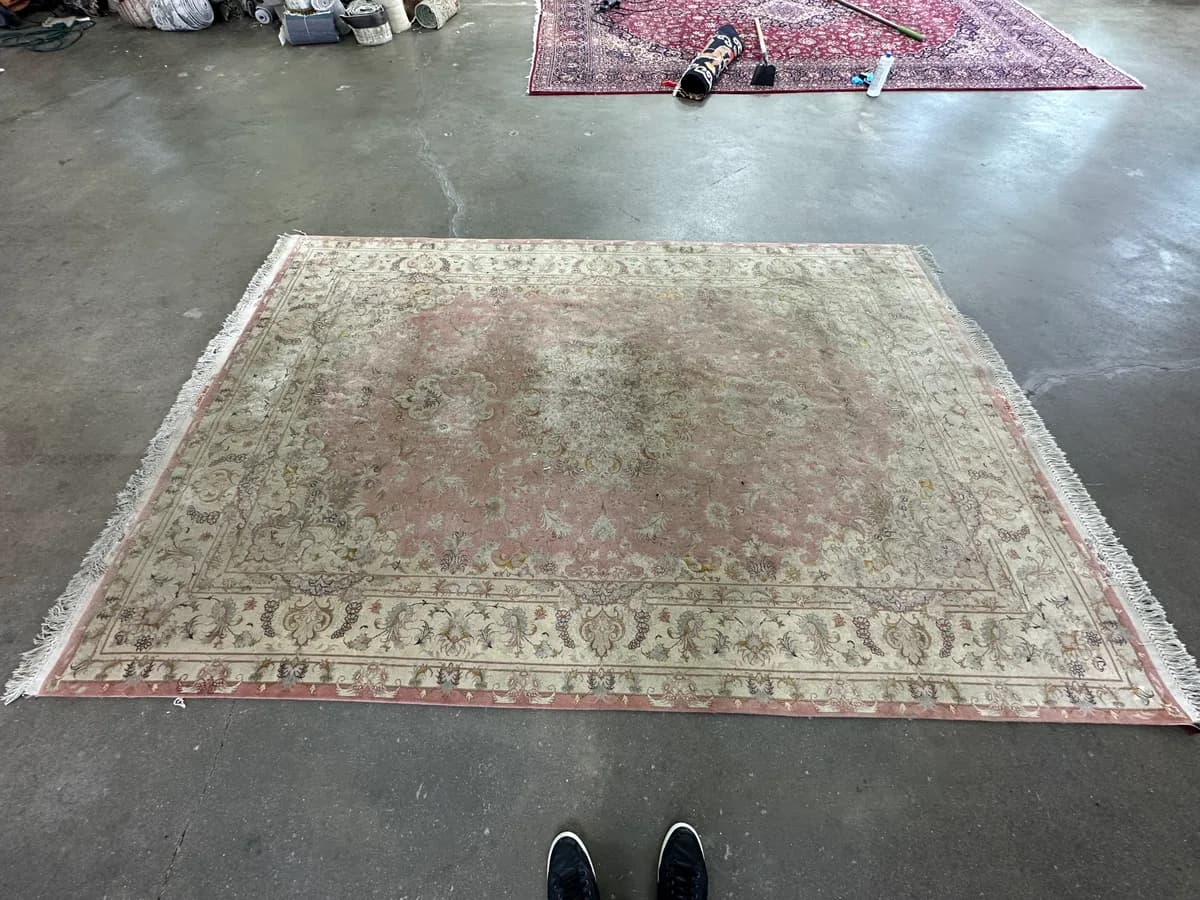
9×12 Tabriz — Water Damage & Color Bleed Restoration

The rug
9×12 Persian Tabriz, hand-knotted.
Condition at intake
A water event had saturated the rug over an extended period. Prolonged moisture contact broke the mordant bond on several color areas, allowing pigment to migrate outward across roughly a third of the field.
Treatment
Full-immersion wash to remove embedded soil and lift surface bleed deposits. Targeted color-migration treatment — neutralising the chemistry driving continued dye movement — before color restoration returned the affected areas to their original density. Flat-dried over 60+ hours.
Result
Color bleed fully resolved. Affected areas restored to original color density. Rug returned to active use.
Pricing

What rug cleaning costs in Chicago

Cleaning is priced per square foot by fiber type: $3/sq ft for machine-made rugs, $4/sq ft for hand-tufted rugs, $5/sq ft for hand-knotted wool rugs (Persian, Oriental, Turkish, Caucasian), and $7–$12/sq ft for silk and silk-blend rugs. An 8×10 hand-knotted wool rug (80 sq ft) typically runs about $400. Four things move the number:

  • Fiber type

    Wool, silk, wool-silk blend, cotton, and synthetic each demand different chemistry and handling time. Silk and silk-blend pieces take the most care and time, so they price highest.

  • Size

    Cleaning is priced from a per-square-foot baseline, so a 9×12 costs more than a 3×5. A $250 minimum applies to small pieces.

  • Condition

    Heavy soiling, pet damage, and especially urine contamination require added decontamination passes and longer handling, which affects the estimate.

  • Special treatment

    Color-run correction, foundation repair, moth treatment, or stain protection added during the same visit are quoted on top of the base clean.

Every rug receives a free written estimate before any work begins. You approve the price first — there are no surprise charges. Use the calculator below for an instant per-square-foot estimate.

Specialty cleaning

Cleaned to the fiber, not to a formula

Silk is not wool, an antique is not a modern rug, and pet urine is not a stain. Each gets a different hand.

Silk rug cleaning

Silk is the most demanding fiber we clean and the one most often ruined by the wrong hands. A fine silk rug — a Qum, a Hereke, a Kashmir, or a silk-highlighted city Persian — can carry a thousand or more knots per square inch, and the very quality that makes silk luminous also makes it fragile when wet. Silk loses a large share of its strength while saturated, its dyes are frequently the most fugitive of any fiber, and heat or alkalinity will dull the sheen permanently.

Silk is always flat-washed, never put in the pit: we drop water temperature further than we do for wool and use the gentlest neutral chemistry in the workshop. Dye testing is non-negotiable on every color, and we groom the pile damp so the nap dries lying flat and keeps its light. Silk is never hung wet, and drying is slower and more closely watched than on a wool piece. Done correctly, a silk rug comes back with the depth and glow it had when it was new.

If your rug is silk — or you are not sure whether it is silk, mercerised cotton, or art silk (viscose), which behave very differently in water — send us a photo before anyone touches it. A misidentified viscose rug cleaned as if it were silk is one of the most common ways a "washable" rug is destroyed.

Read our full guide to silk rug cleaning →

Wool rug cleaning

Wool is the backbone of the hand-knotted world, and most of the rugs that leave our Skokie workshop are wool. Good wool is remarkably forgiving — it resists soil, springs back from compression, and holds dye beautifully — but it has two non-negotiable enemies: heat and high alkalinity. Both come standard on the equipment most "rug cleaners" actually own.

Heat felts wool: the scales on each fiber lock together and the pile turns coarse, matted, and dull in a way that cannot be reversed. High-alkaline detergent strips lanolin, the natural oil that gives wool its resilience and quiet luster, leaving the rug dry, brittle, and prone to shedding. Our process keeps the bath cool and the chemistry neutral, so the wool is cleaned without ever being cooked or stripped.

Read how we clean wool rugs →

Antique rug cleaning

An antique rug — generally one over about eighty years old — is cleaned as a conservation object, not a household furnishing. Age changes everything: the foundation may be weakened, earlier repairs may be hidden in the pile, the dyes are almost always natural and fugitive, and the value at stake can run to five and six figures. The goal shifts from "make it look new" to "clean it safely while preserving everything original."

We begin with a closer inspection than a modern rug receives — mapping weak areas, prior reweaves, sun-faded zones, and any dyes that show movement under test. Fragile pieces are flat-washed rather than immersed, chemistry is milder, handling more careful, and drying slower and flatter. Where an antique needs structural attention, cleaning is coordinated with our restoration work so the fiber is never stressed twice.

This is the work Ghorban Ahmadi brought back from conserving pieces for the State Hermitage Museum, the Musée du Louvre, and the British Museum — the discipline of doing as little as the rug needs and nothing it cannot withstand. If you have inherited or acquired an antique and are unsure of its age or origin, we are glad to give an informed opinion before any cleaning is scheduled.

Read how to identify an antique rug →

Pet urine & odor removal

Pet urine is not a surface stain — it is a chemistry problem that lives in the foundation. Fresh urine is mildly acidic, but as it dries it turns alkaline and crystallises into salts that bond to the fiber, draw moisture back out of the air, and keep releasing odor every humid day. Worse, alkaline urine salts are exactly the conditions that make natural dyes bleed, which is why so many pet accidents leave a permanent brown or red halo.

Surface cleaning and consumer "enzyme" sprays cannot reach this. The contamination has to be flushed out of the rug entirely, which means full-immersion washing combined with targeted decontamination of the affected zones — neutralising the salts, breaking down the odor-causing compounds, and rinsing until the foundation is genuinely clean rather than merely masked.

Severe or repeated contamination sometimes also needs color correction where the urine has already moved a dye, and we will tell you honestly before we start what is recoverable and what is not. The result of a proper decontamination is a rug that is clean to the foundation and stays odor-free — not one that smells fine until the next humid afternoon.

Read pet odor & urine removal →

Persian rug cleaning

Persian rug cleaning is the core of what we do. Woven across Iran in distinct weaving centers — Tabriz, Kashan, Heriz, Kerman, Isfahan, Qum, Nain, Sarouk, Bidjar, Mashhad — Persian rugs share the traits that make hot-water cleaning so dangerous: hand-spun wool or silk pile, a cotton or silk foundation under tension, and natural dyes fixed by mordants that are sensitive to both heat and pH.

Each region also has its own quirks a careful cleaner has to know. A Heriz carries heavy, lanolin-rich wool that dusts and washes robustly; a fine Isfahan or Nain has delicate silk highlights that need a gentler hand; an older Kerman may have a soft, easily abraded pile. We match the wash to the piece rather than running every Persian rug through one recipe.

Read Persian rug cleaning in Chicago →

Oriental rug cleaning

"Oriental" covers the broader hand-knotted world beyond Persia — Turkish rugs from Oushak, Hereke, and Konya; Caucasian weavings such as Kazak, Shirvan, and Karabagh; Afghan and Central Asian Bokhara and Tekke; and the Chinese, Indian, and Moroccan traditions. They differ in pattern, palette, and weave, but they share the same fundamental construction and the same vulnerability to heat and alkalinity.

Because the category is so broad, identification matters before cleaning. A flatweave Caucasian kilim has no pile to protect but every reason to bleed; a thick Moroccan Beni Ourain is undyed natural wool that shows every cleaning mistake; an antique Chinese rug may have been chemically washed at origin in ways that affect how it responds now. We read the rug first, then choose the wash.

Whatever the origin, the work is done in-house in Skokie, never outsourced. If you have a piece from a tradition not listed here, send photos and we will tell you exactly how we would approach it.

Read oriental rug cleaning in Chicago →

Rugs we work on

We clean every type of hand-knotted rug

From a village Kazak to a fine silk Qum, each tradition has its own wool, dye, and weave — and its own correct handling.

  • PersianTabriz, Kashan, Heriz, Kerman, Isfahan, Qum, Nain, Sarouk, Bidjar, Mashhad
  • TurkishHereke, Oushak, Konya
  • CaucasianKazak, Shirvan, Karabagh
  • MoroccanBeni Ourain, Boucherouite
  • TibetanWool and wool-silk knotted pile
  • IndianAgra, Jaipur
  • ChineseArt Deco, Peking
  • ArmenianAntique and tribal weavings
  • AfghanBokhara, tribal Baluch
  • PakistaniBokhara and fine hand-knotted
From the workshop

Before & after

Real rugs, real homes across Chicago and the North Shore. Photos are being matched from the workshop archive.

  • Soiled, dulled 19th-century Tabriz rug before hand washing — Ahmadi Rug, Lake Forest ILBefore
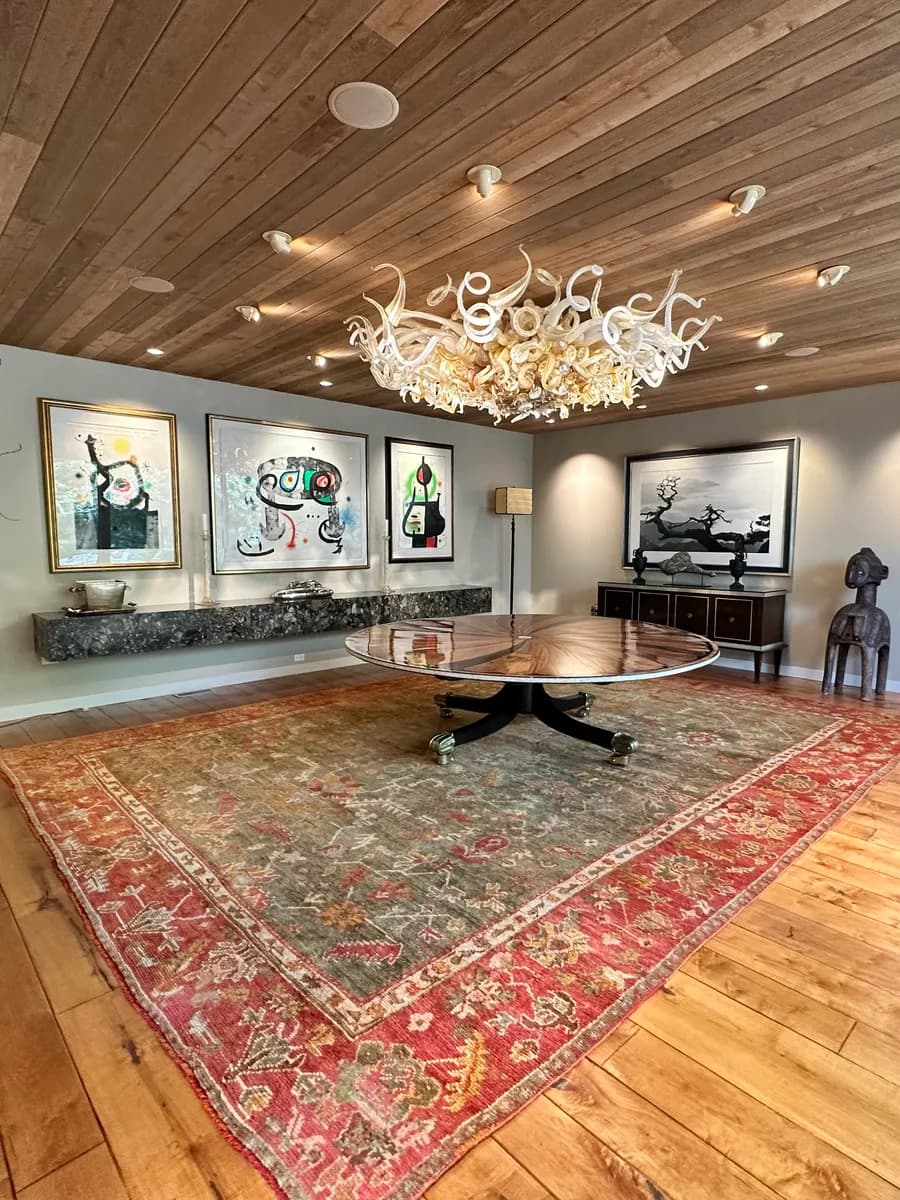
    Cleaned and re-blocked 19th-century Tabriz rug with restored red medallion after hand washing — Ahmadi Rug, Lake Forest ILAfter
    19th-century Tabriz
    Full hand wash & re-block
    Lake Forest
  • Sun-dulled antique Tabriz rug with washed-out reds before color correction — Ahmadi Rug, Chicago North ShoreBefore
    Color-restored antique Tabriz rug with deep revived reds after conservation color correction — Ahmadi RugAfter
    Antique ivory-ground Tabriz
    Sun-fade color correction
    North Shore
  • Sun-faded antique wool Oushak rug before color correction — Ahmadi Rug, Wilmette ILBefore
    Color-restored Oushak rug installed in a Wilmette dining room after conservation cleaning — Ahmadi RugAfter
    Wool Oushak
    Sun-fade color correction
    Wilmette
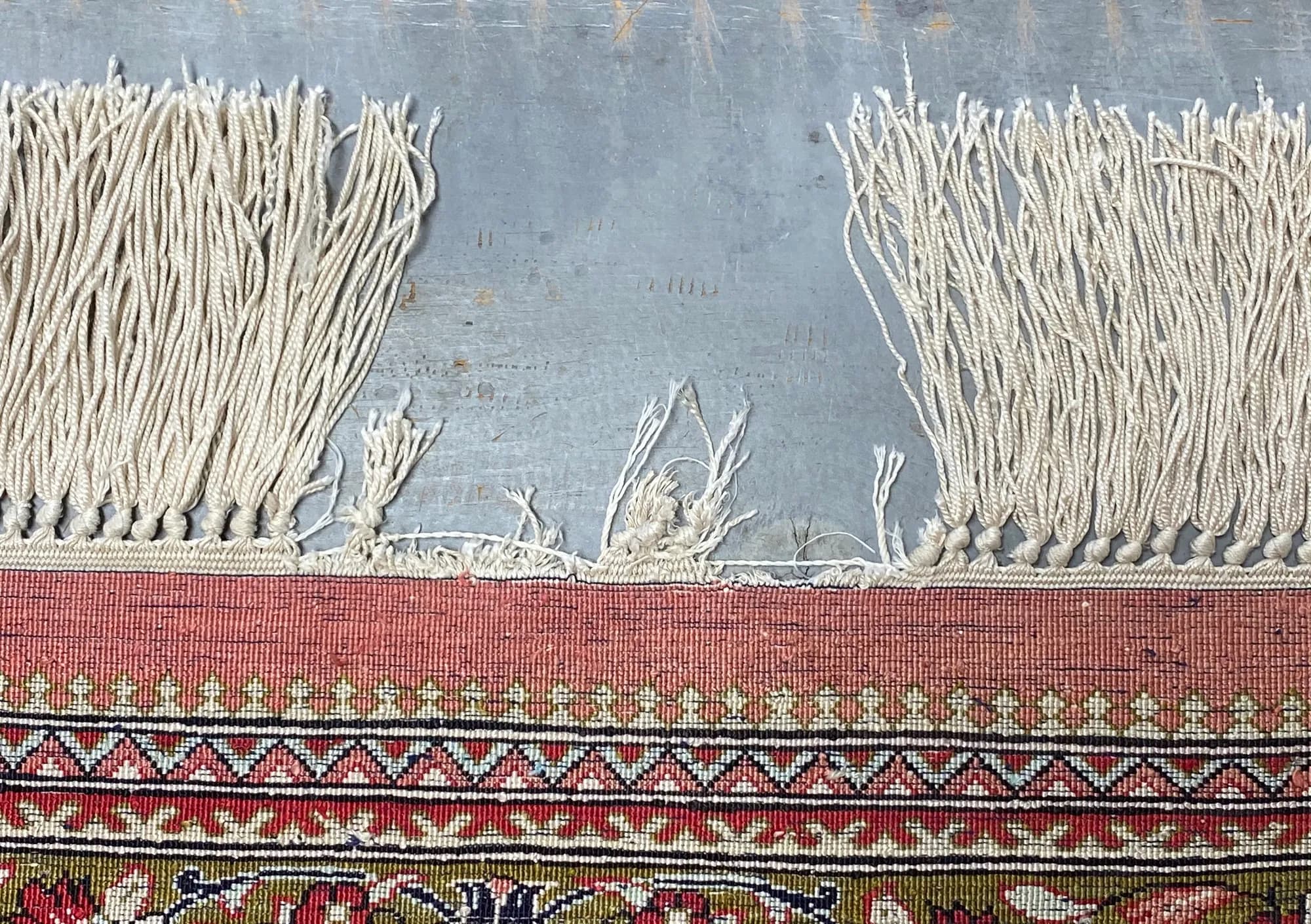
  • Fine silk floral rug with worn, broken fringe before restoration — Ahmadi Rug, Skokie ILBefore
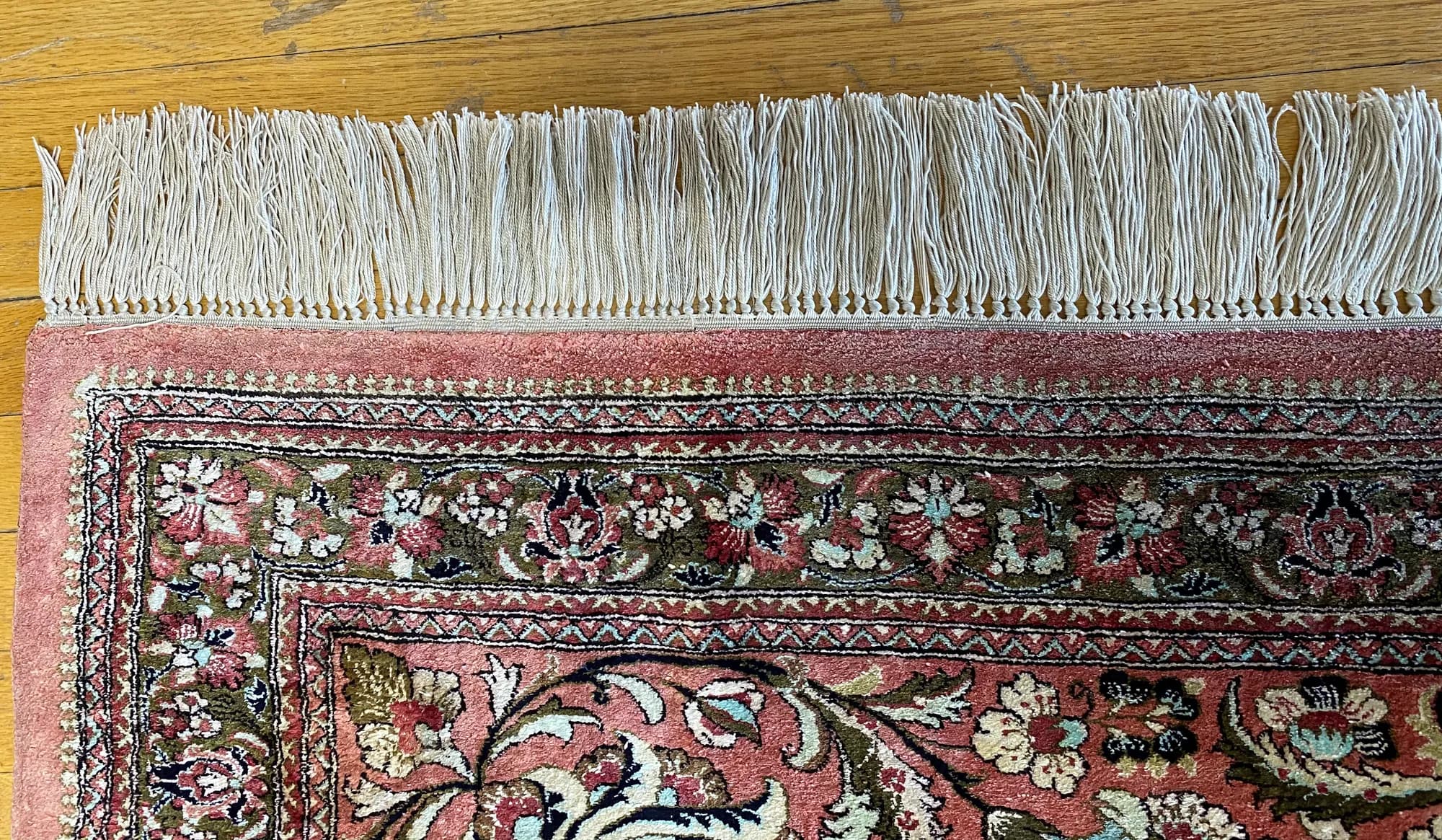
    Fine silk floral rug with evenly rewoven fringe after hand restoration — Ahmadi Rug, Skokie ILAfter
    Fine silk floral rug
    Fringe & pile restoration
    Skokie
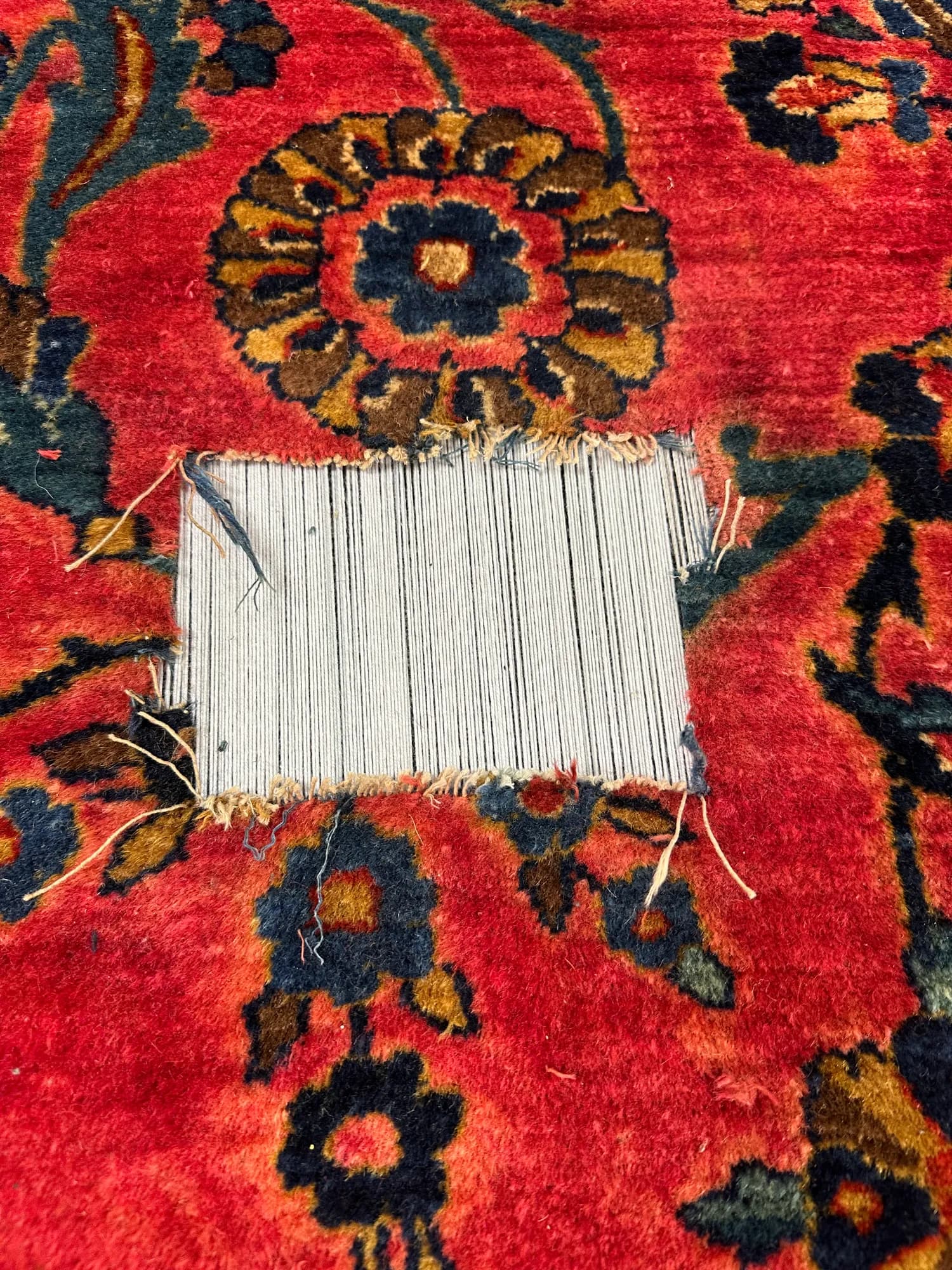
  • Red Sarouk rug with a worn hole exposing the foundation before reweaving — Ahmadi Rug, Lincoln Park ILBefore
    Red Sarouk rug with hand-rewoven pile matching the original design after repair — Ahmadi Rug, Lincoln Park ILAfter
    Red Sarouk
    Hand reweaving
    Lincoln Park
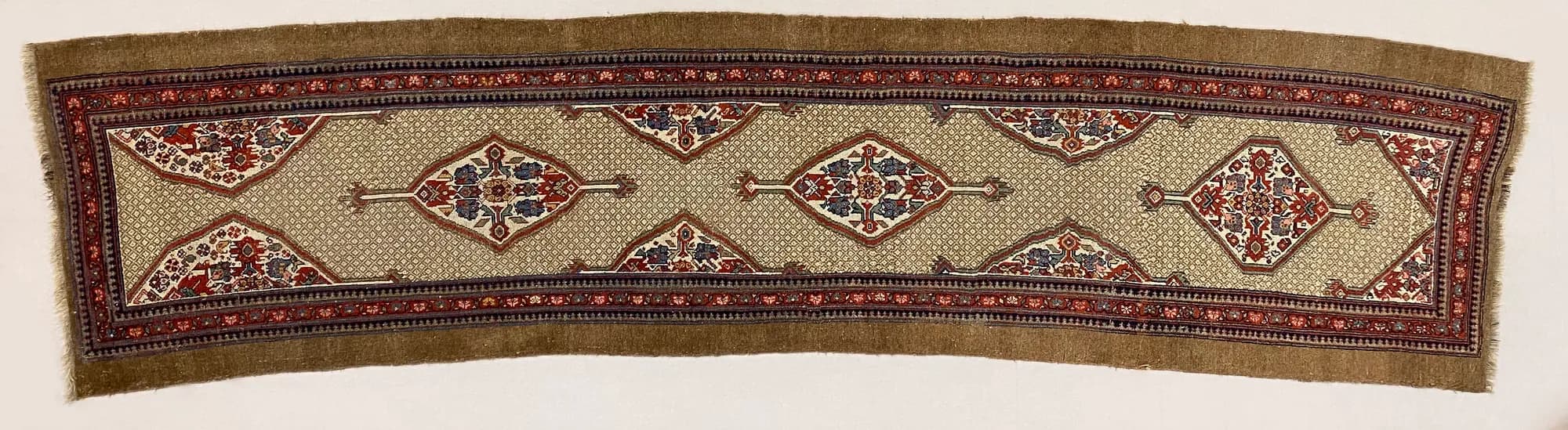
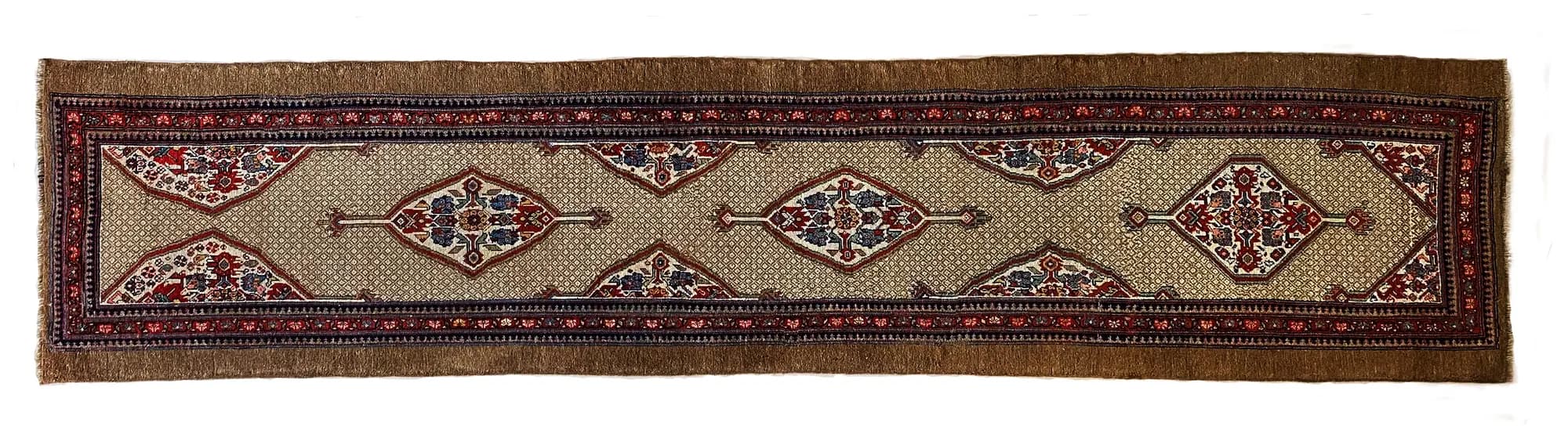
  • Antique tribal runner buckled and out of square before wash and re-blocking — Ahmadi Rug, Skokie ILBefore
    Antique tribal runner washed and re-blocked straight and flat — Ahmadi Rug, Skokie ILAfter
    Antique tribal runner
    Wash & re-blocking
    Skokie
Cleaning calculator

Estimate your rug cleaning in 30 seconds

Enter dimensions and rug type for a ballpark range. A firm written quote follows after Bobby inspects the rug or sees a photo.

1 · Dimensions

Enter both dimensions.

2 · Rug type
Reviews

What our clients say.

★★★★★
5.0 · 84+ Google reviews
  • ★★★★★
    “I can't speak highly enough of Bobby and Ahmadi Rug! Before we called, we had significant damage to our handmade wool rugs from small clothing moths. I called several rug cleaning services and none came close to the level of expertise, service, and kindness I experienced with Bobby. They look great now and I'm so happy.”
    Linda Braasch
    Chicago
  • ★★★★★
    “Wonderful! My handmade rug was restored and cleaned beautifully after having been on my floor for over 20 years with pets. The sides had been damaged from cats and the fringe was uneven. I had almost considered it beyond repair and was so surprised when it was rolled out in front of me.”
    Deborah Kraak
    Chicago
  • ★★★★★
    “Highly recommend for silk rug cleaning! We had a silk rug that needed a deep clean as well as glue removal and we could not be happier with the results. Bobby was very communicative throughout the whole process and answered questions as needed!”
    Heather Arden
    Chicago

Common questions

  • Why can’t I steam clean my oriental rug?

    Hot-water extraction (steam cleaning) is built for synthetic wall-to-wall carpet, not hand-knotted rugs. The heat felts and shrinks wool, the high pressure drives water into the foundation, and the alkaline detergent strips lanolin and disturbs natural dyes. The result is shrinkage, dye migration, and foundation damage that is expensive or impossible to reverse. Museum textiles are never steam cleaned for exactly these reasons.

  • How do I evaluate a rug cleaner in Chicago?

    You do not need to know rug chemistry — you need honest answers to four questions. Do they hand wash, or machine extract? Only hand washing is right for a hand-knotted rug. Cold water or hot? Cold, always — anything labeled "steam" or "hot extraction" is the wrong process. Do they dye-test before washing? The answer should be yes, on every rug, before any water touches the pile. How do they dry it? Flat, at room temperature, with monitored airflow — anyone who says "in the sun" or "with heated air" does not understand what drying does to a natural-dye rug. Those four answers filter the Chicago market faster than any review score.

  • How do I know if my rug needs professional cleaning?

    Dull color and flattened pile are the clearest signs — both caused by embedded dry soil that vacuuming does not reach. Hold a section of the rug over a white surface and gently flex it; if fine grit falls out, the rug has significant embedded particulate that needs professional dusting and washing. Pet odor is a separate signal — it originates in the foundation and needs a decontamination soak that household methods cannot deliver.

  • How long does professional rug cleaning take?

    Most cleaning jobs at our Skokie workshop are complete in 5–7 business days. That includes inspection and dye testing, dry soil extraction, hand washing, 48–72 hours of controlled flat drying, grooming, and final inspection. Thicker or heavily soiled rugs take longer, and restoration or major repair adds time depending on scope, which we quote up front. Rush turnaround can sometimes be arranged — call Bobby to check availability.

  • How much does rug cleaning cost in Chicago?

    Cleaning is priced per square foot by fiber type: $3/sq ft for machine-made rugs, $4/sq ft for hand-tufted rugs, $5/sq ft for hand-knotted wool rugs (Persian, Oriental, Turkish, Caucasian), and $7–$12/sq ft for silk and silk-blend rugs. An 8×10 hand-knotted wool rug (80 sq ft) typically runs about $400. Every rug receives a free written estimate before any work begins, so you always approve the price first — there are no surprise charges.

  • Do you offer free pickup?

    Yes. We provide free insured pickup and delivery throughout Chicago and the North Shore — Lincoln Park, Gold Coast, Skokie, Evanston, Wilmette, Winnetka, Glencoe, Highland Park, Lake Forest, Northbrook, and Glenview — plus western suburbs including Hinsdale, Oak Park, and Naperville. We come to you, roll the rug properly, and photograph it for chain-of-custody.

  • Are you IICRC certified?

    Yes, Ahmadi Rug is an IICRC-certified firm. Beyond that certification, our methods follow textile-conservation practice — Ghorban Ahmadi has performed conservation work for the State Hermitage Museum, the Musée du Louvre, and the British Museum.

  • Can you remove pet urine smell from a rug?

    Yes, when the rug is treatable. Urine odor comes from alkaline salts that crystallise in the foundation and release smell in humidity. Surface sprays cannot reach them. We flush the contamination out through full-immersion washing combined with targeted decontamination of the affected zones, neutralising the salts rather than masking the smell. We will tell you honestly before starting what is fully recoverable.

  • What is conservation-grade cleaning?

    Conservation-grade cleaning means treating each rug the way a museum textile conservator would: inspect and dye-test first, remove dry soil mechanically, hand-wash in cool water with pH-neutral chemistry matched to the fiber, and dry flat under controlled airflow. The goal is to clean thoroughly while preserving everything original — fiber, dye, and structure.

  • How often should I have my rug professionally cleaned?

    For most rugs in normal household use, every 2 to 2.5 years is right. High-traffic rooms like living and dining areas need it sooner — every 12 to 18 months — and homes with pets or allergy-sensitive households do best on an annual clean, every 12 months. Between professional cleanings, regular gentle vacuuming and prompt attention to spills do most of the maintenance.

  • Can you clean an antique Persian rug?

    Yes — antique Persian rugs are a core specialty. They are cleaned as conservation objects: a closer inspection, gentler chemistry, more careful handling, and slower flat drying than a modern rug receives. Where an antique also needs structural work, cleaning is coordinated with restoration so the fiber is never stressed twice.

  • Will the colors run during cleaning?

    Not when the rug is tested first. We run a dye-stability test on every color before washing, checking how each dye responds to neutral, mildly acidic, and mildly alkaline conditions. If a dye shows movement, we adjust the method or set the dye before proceeding. Untested hot-water cleaning is what causes colors to run.

  • Do you clean silk rugs?

    Yes. Silk is the most delicate fiber we handle, so it gets the gentlest treatment in the workshop — washed flat rather than immersed, cooler water, the mildest neutral chemistry, and closely watched flat drying; silk is never hung wet. We also identify whether a rug is true silk, mercerised cotton, or viscose (art silk) first, because viscose behaves very differently in water and is easily ruined if mistaken for silk.

  • Can you remove moth larvae?

    Yes. Cleaning flushes out larvae, eggs, and the casings and frass they leave behind, and we pair it with targeted moth treatment to stop an active infestation. We also flag early moth activity during inspection so you can act before the damage spreads. Persistent infestations are best handled with our dedicated moth treatment service.

  • What’s the difference between rug cleaning and carpet cleaning?

    Wall-to-wall carpet is a fixed synthetic surface cleaned in place with hot-water extraction. A hand-knotted rug is a movable textile of protein fiber, natural dye, and a tensioned foundation — it must be inspected, dye-tested, dusted, and hand-washed off the floor, then dried flat. Using carpet equipment on a rug is the single most common cause of the damage we are later asked to repair.

  • Are your chemicals safe for kids and pets?

    Yes. We use pH-neutral, non-ionic cleaning chemistry and rinse every rug until the water runs clear, so nothing harsh is left in the pile. Rugs come back clean and residue-free, ready for a household with children and pets.

  • How do I prepare my rug for pickup?

    Very little is needed. Remove furniture from the rug if you can, and note any specific stains or problem areas so we can flag them at intake. Leave the rolling and wrapping to us — rolling a rug the wrong way can crack a dry or brittle foundation, so we handle that on site.

  • What if I’m not satisfied with the cleaning?

    Tell us. We would rather make something right than leave a customer unhappy — it is why we hold a 5.0 rating across 84+ Google reviews. If anything about the result is not what you expected, we will look at it and address it.

  • Do you fix damage during cleaning, or is that separate?

    Repair and restoration are separate services, but we coordinate them with cleaning so your rug is only handled once. During inspection we flag any fraying edges, loose fringes, holes, or weak foundation, give you a written estimate, and — with your approval — carry out the repair in the same visit.

  • Do you guarantee your work?

    Yes. Every rug is checked against its intake photographs before it leaves, you receive that photo record with the rug, and we stand behind the result. Our zero-complaint record over three generations is something we protect on every single job.

  • Can you clean a rug I bought overseas?

    Absolutely — rugs bought in Istanbul, Tehran, Marrakech, Jaipur, and beyond come through the workshop regularly. We identify the fiber, weave, and likely origin, test the dyes, and clean it by the method that piece calls for. If you are also curious whether what you bought is what you were told, we are happy to give an informed opinion.

Service area

Serving Chicago and the North Shore

Ahmadi Rug provides rug cleaning for homeowners and interior designers across Chicago and the North Shore. We offer free insured pickup and delivery from Lincoln Park, Gold Coast, Evanston, Wilmette, Winnetka, Glencoe, Lake Forest, Highland Park, Northbrook, Glenview, and Skokie — as well as western suburbs including Hinsdale, Oak Park, and Naperville, and the Fox Valley via our St. Charles, Geneva, and Batavia drop-off.

Most cleaning jobs are completed within 5–7 business days and returned freshly washed, groomed, and wrapped. Rush service is sometimes available — call Bobby for availability.

To schedule a free pickup from anywhere in our service area, call (847) 440-1349 or submit an estimate request online.

Related guides

Want ongoing protection? Our Rug Care Program includes scheduled cleaning and preventive care for clients who want to protect their investment long-term.

Free written estimate

Your rug deserves the conservator’s method.

Send a photo or book a free insured pickup from anywhere in Chicago or the North Shore. We respond the same business day.

Request an estimate

Tell us about your rug

Free download

The Rug Owner’s Care Guide

10 pages covering fiber care, rotation schedules, spill response, moth prevention, and when to call a professional. Written by Ghorban from 42 years of conservation work.

No spam. Unsubscribe any time.

CallTextEstimate