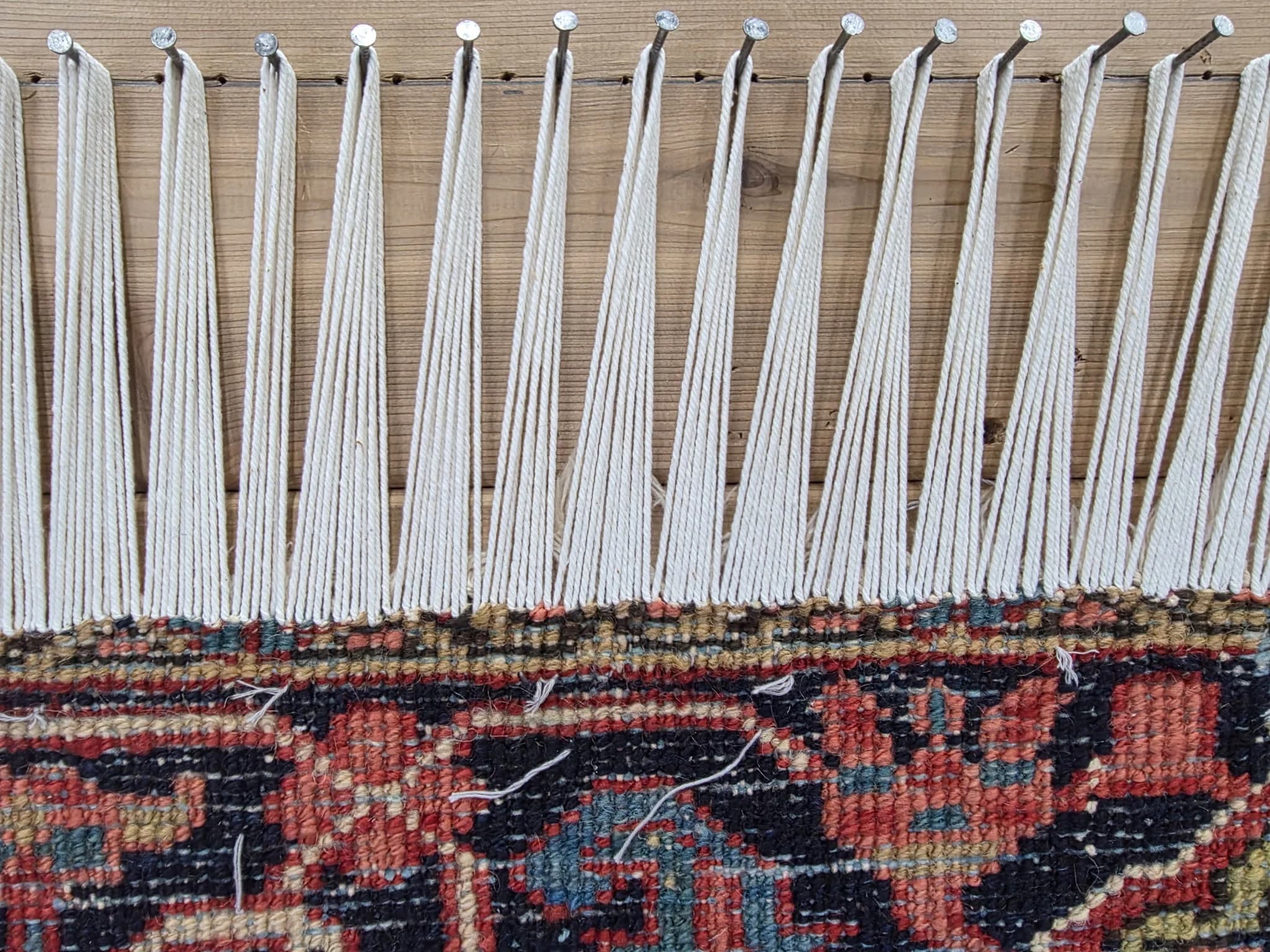
Restoration is a different discipline from repair
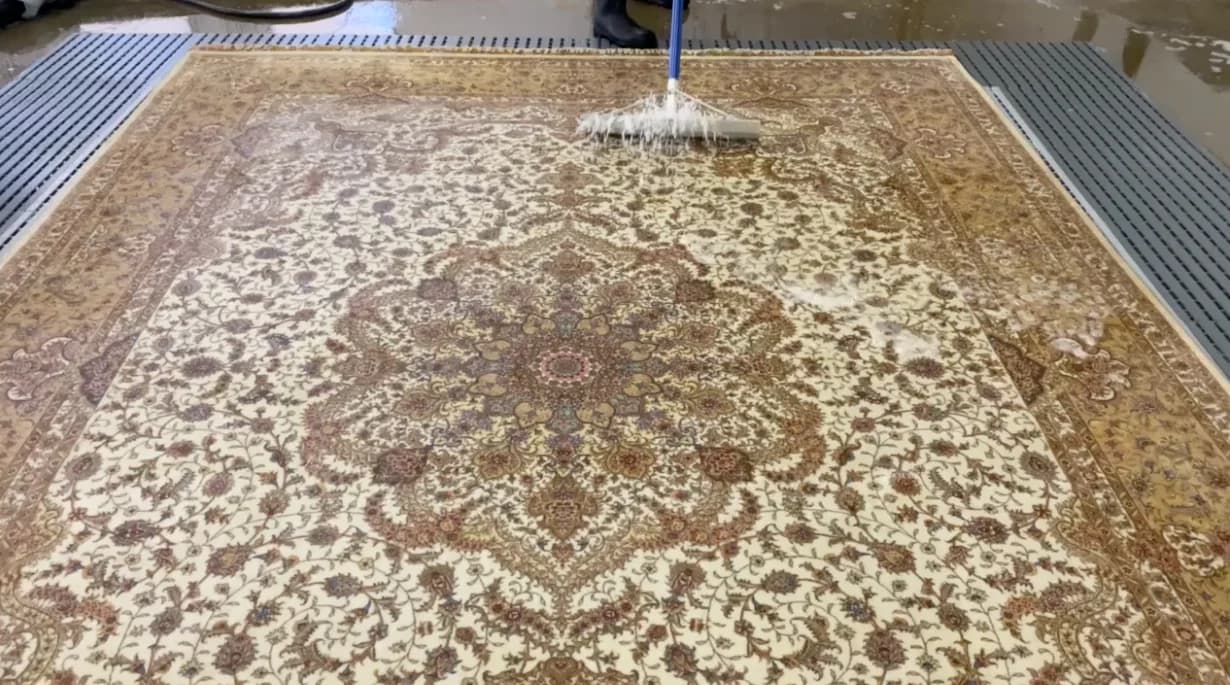
A repair addresses a specific injury — a moth area, a torn fringe, a chewed corner — while the rest of the rug is sound. Antique rug restoration is a complete conservation treatment: foundation integrity, pile height, dye condition, and cleanliness all evaluated and brought back toward original. It is the kind of work museums commission for their textile collections, performed over weeks rather than days — and it is governed by a single principle: do as much as the rug needs and nothing it cannot withstand. In nearly every case it begins with a full hand-wash cleaning to flush out grit, salts, and infestation and reveal the rug’s true condition. Here is exactly what conservation-grade restoration involves, and why each stage matters.
Condition survey & documentation
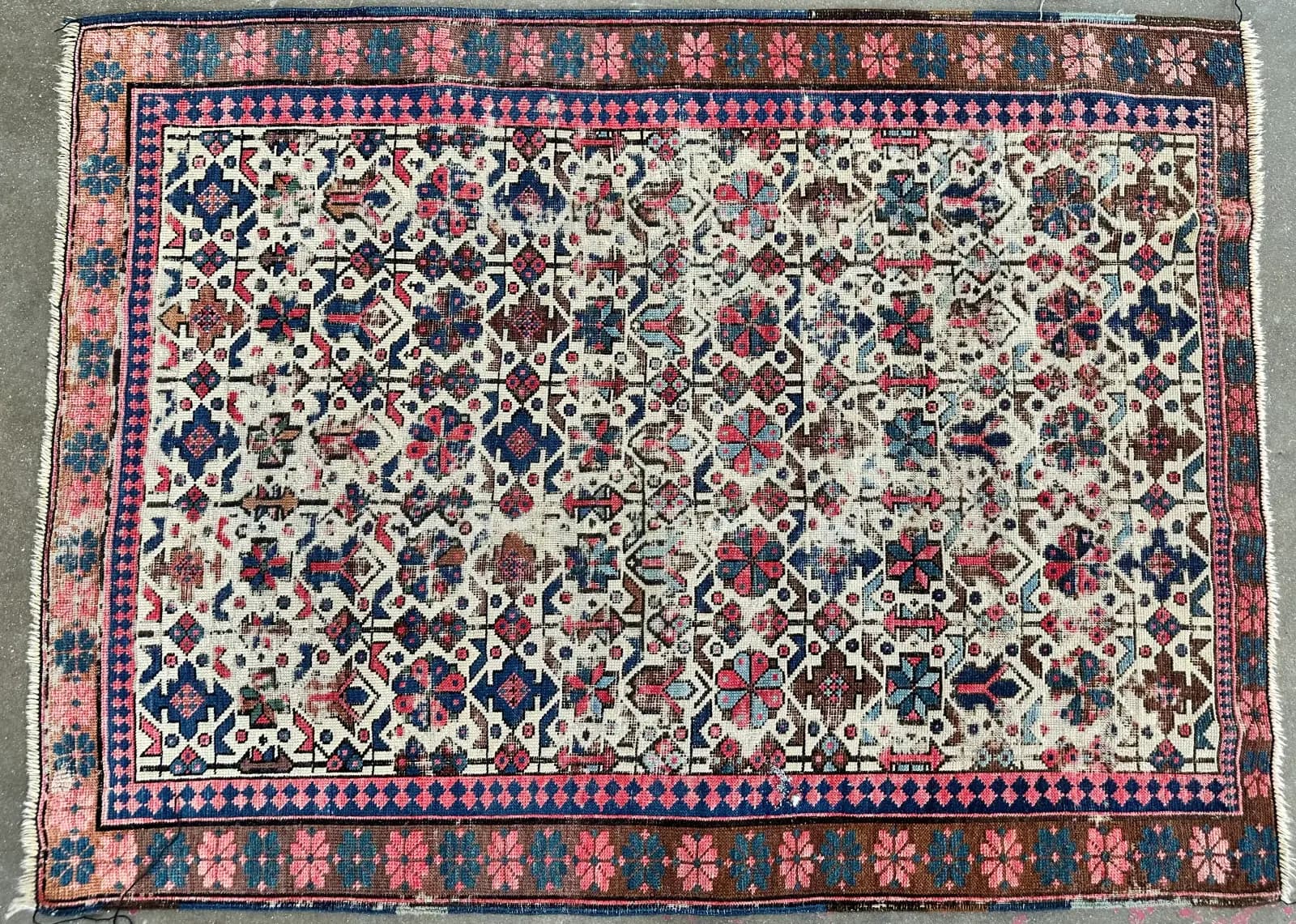
Before anything is touched, the rug is examined front and back under raking light and logged in detail — foundation integrity, dye stability, pile loss, prior repairs, structural weakness, and provenance markers all photographed and recorded. You receive a written condition report that states exactly what we propose to do, what we would leave untouched, and what the rug can and cannot recover.
Why it matters: restoration is governed by what the original textile will permit. The survey is what separates honest conservation from over-treatment — and it is the document your insurer or appraiser will ask for first.
Treatment plan & reversibility
We write a staged plan that follows conservation principle, not cosmetics: do as much as the rug needs and nothing it cannot withstand, and keep every intervention reversible so a future conservator can undo our work without harming the original. You approve the plan and the price before a single knot is tied.
Why it matters: irreversible shortcuts — glued backings, synthetic over-dyeing, machine patching — raise a rug’s value on the day and destroy it within years. A reversible plan protects both the piece and its market.
Foundation stabilization
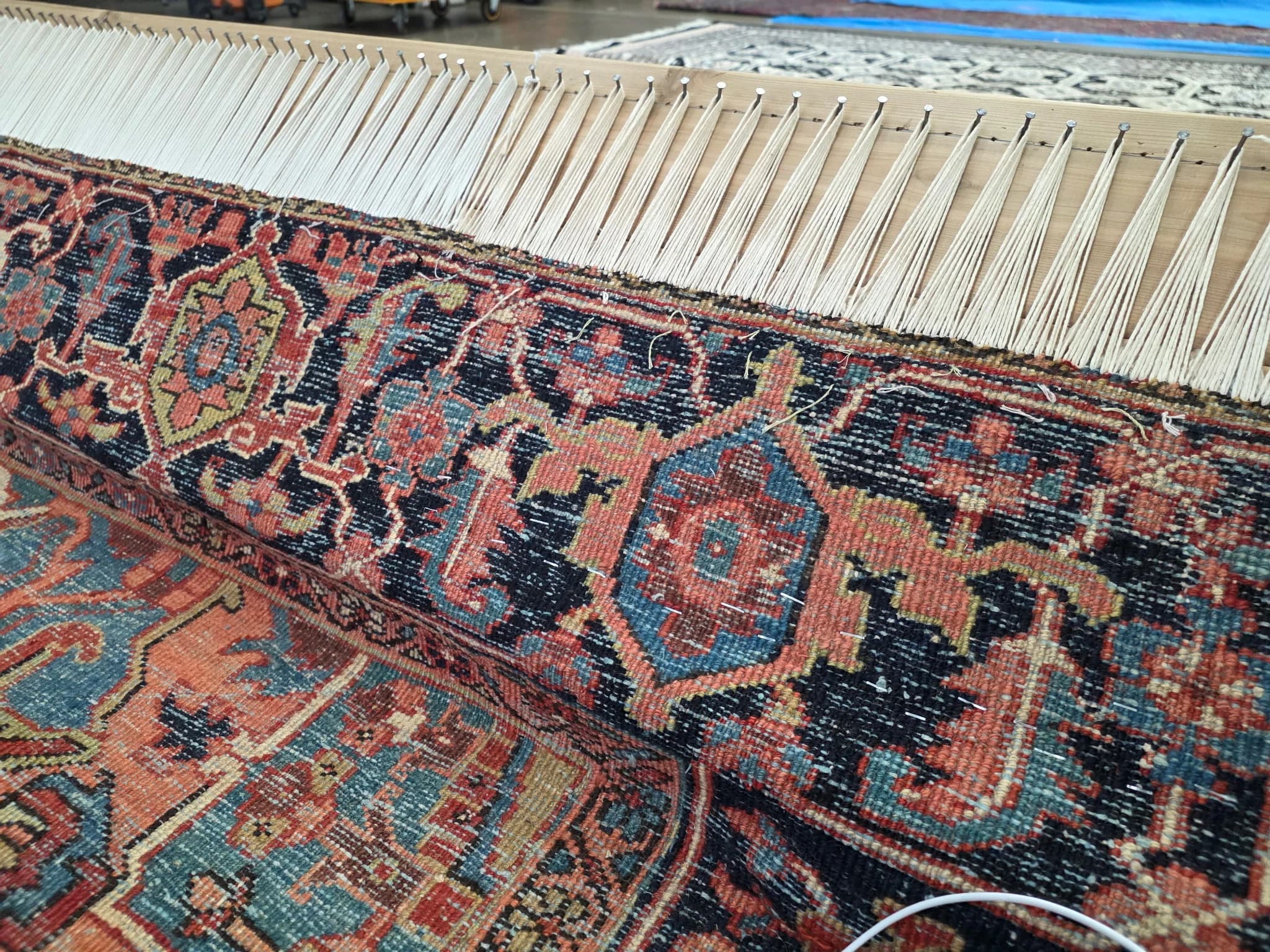
Everything else depends on a sound foundation, so the warp and weft come first. Rotted or brittle cotton is consolidated or re-warped under tension, broken wefts are rebuilt, and the structure is brought back to load-bearing before any pile work begins.
Why it matters: reweaving onto a failing foundation simply rebuilds beautiful pile onto threads that are about to give way. Stabilize the structure first and the restoration lasts generations; skip it and it reopens in a season.
Reweaving & pile restoration
Lost pile is rebuilt knot by knot on the rug’s own foundation, following the original knot type, density, and pattern, at the original height. Ghorban performs the structurally significant reweaving himself. A single square inch of dense, dye-matched reweave can take four to eight hours of handwork.
Why it matters: a restoration is only invisible if the new wool or silk ages and catches light like the old. The wrong fiber or a flat single-dye match reads as a patch from across the room, however perfect the knotting.
Dye work & conservation cleaning
Migrated dye is drawn back and re-set where chemistry permits, sun-fade differential is brought into tonal alignment by selective hand re-dyeing, and the whole piece receives a pH-managed, fiber-appropriate cold-water wash — the same gentle method used on museum textiles, never truck-mount or high-alkaline chemistry.
Why it matters: dye correction and conservation cleaning are what unify a restoration. Done with the wrong chemistry they bleed, brighten, or flatten the abrash that gives an antique its depth.
Final inspection & documented record
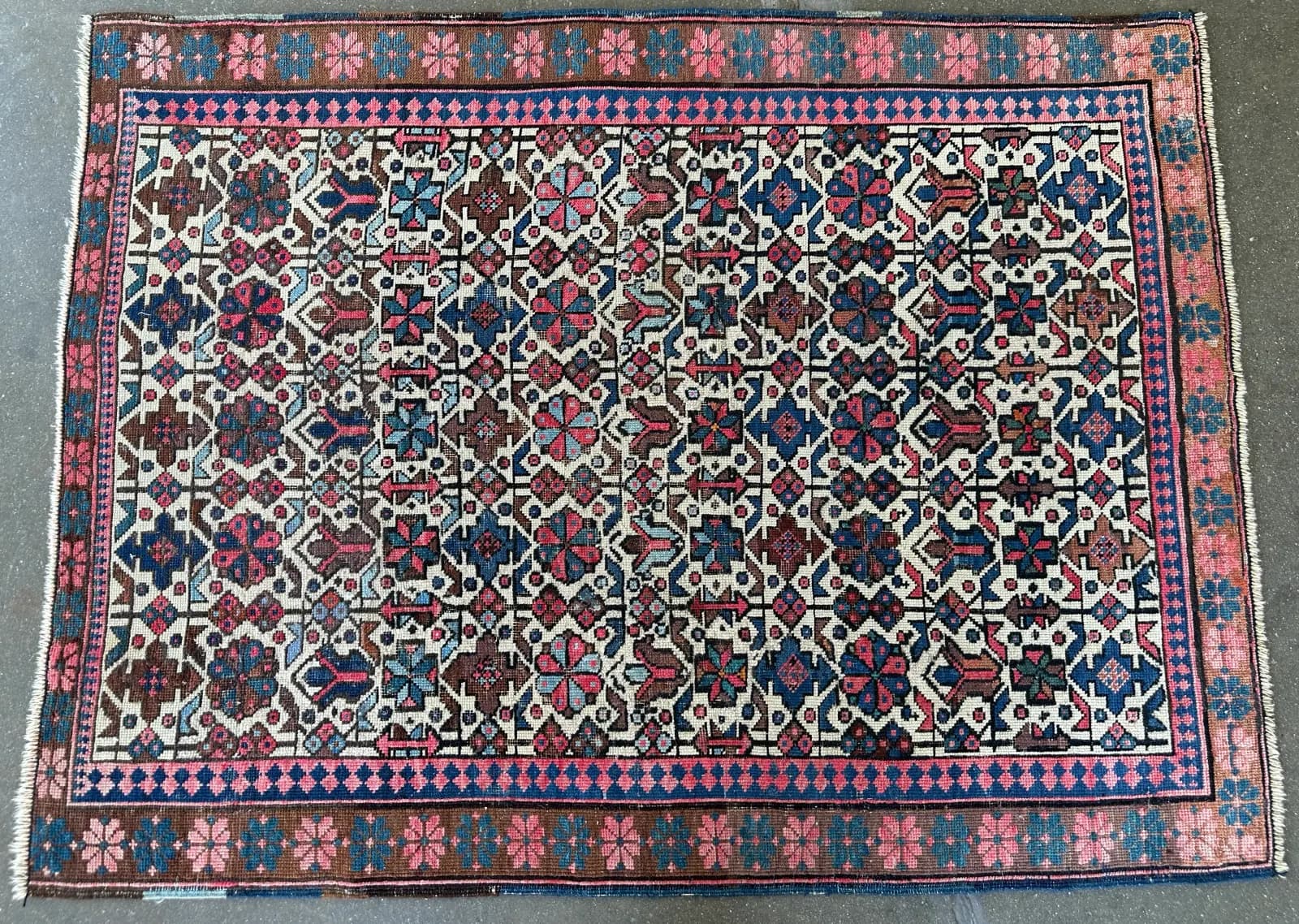
The finished rug is checked against its intake photographs, and you receive a before, during, and after photo record with a written summary of the work performed. Many clients pair this with an updated appraisal, since a properly restored antique often appreciates well beyond the cost of the treatment.
Why it matters: the documentation is the proof the work was done as agreed — the paperwork an appraiser or insurer relies on, and the provenance record that travels with the rug for the rest of its life.
“A restoration is finished when the rug looks like nothing ever happened to it — the foundation sound, the dyes in balance, and our hand invisible. And it is done right when the next conservator can still undo it.”
Not sure whether your rug needs full restoration or a targeted rug repair? Our essay on antique rug repair vs. restoration lays out the decision, and what Persian rug restoration can and cannot save is the honest version. We also pair most major work with a formal rug appraisal so you know what the piece is worth before and after treatment, and where only a section is salvageable we re-finish the sound portion through rug resizing rather than discard it.