What rug cleaning actually involves
Rug cleaning in Chicago is too often sold by a rug cleaning company as a quick steam pass on the living-room floor. A hand-knotted rug needs the opposite: it has to come off the floor and through a controlled, five-step conservation process, because the pile is protein fiber, the foundation is under tension, and the dyes — on anything older — are fugitive. Here is exactly what we do, and what the wrong method does instead.
In workshop order, every rug goes through dusting, pre-spot treatment, the wash, rinse, water extraction, drying, fringe, and a final quality check — after an intake inspection and dye test, and grouped into the five stages below.
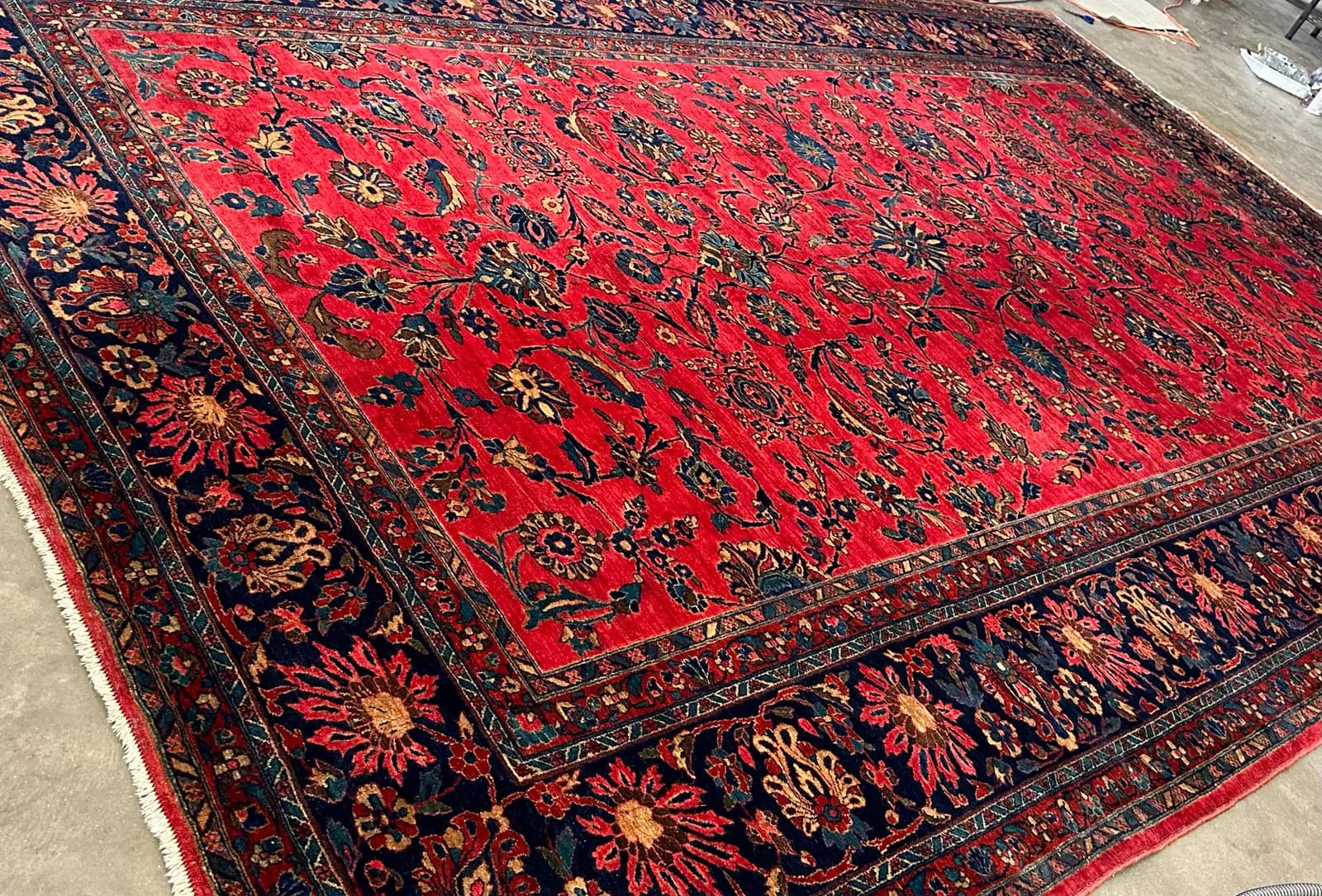
Pre-inspection & dye-stability test
Every rug is logged, photographed front and back, and measured before a drop of water touches the pile. We then run a dye-stability test — dampening a hidden corner under neutral water, then under a mild acidic and a mild alkaline solution — to see whether any color lifts onto the swab.
Why it matters: anything woven before about 1950 is dyed with natural dyes set by metallic mordants. Those dyes are fugitive — they run if they meet the wrong pH or temperature. Testing first is the difference between a wash and a ruined heirloom.
The wrong method: a truck-mounted carpet cleaner skips this entirely and pushes hot detergent into an untested rug. By the time red bleeds into ivory, the migration is already set.
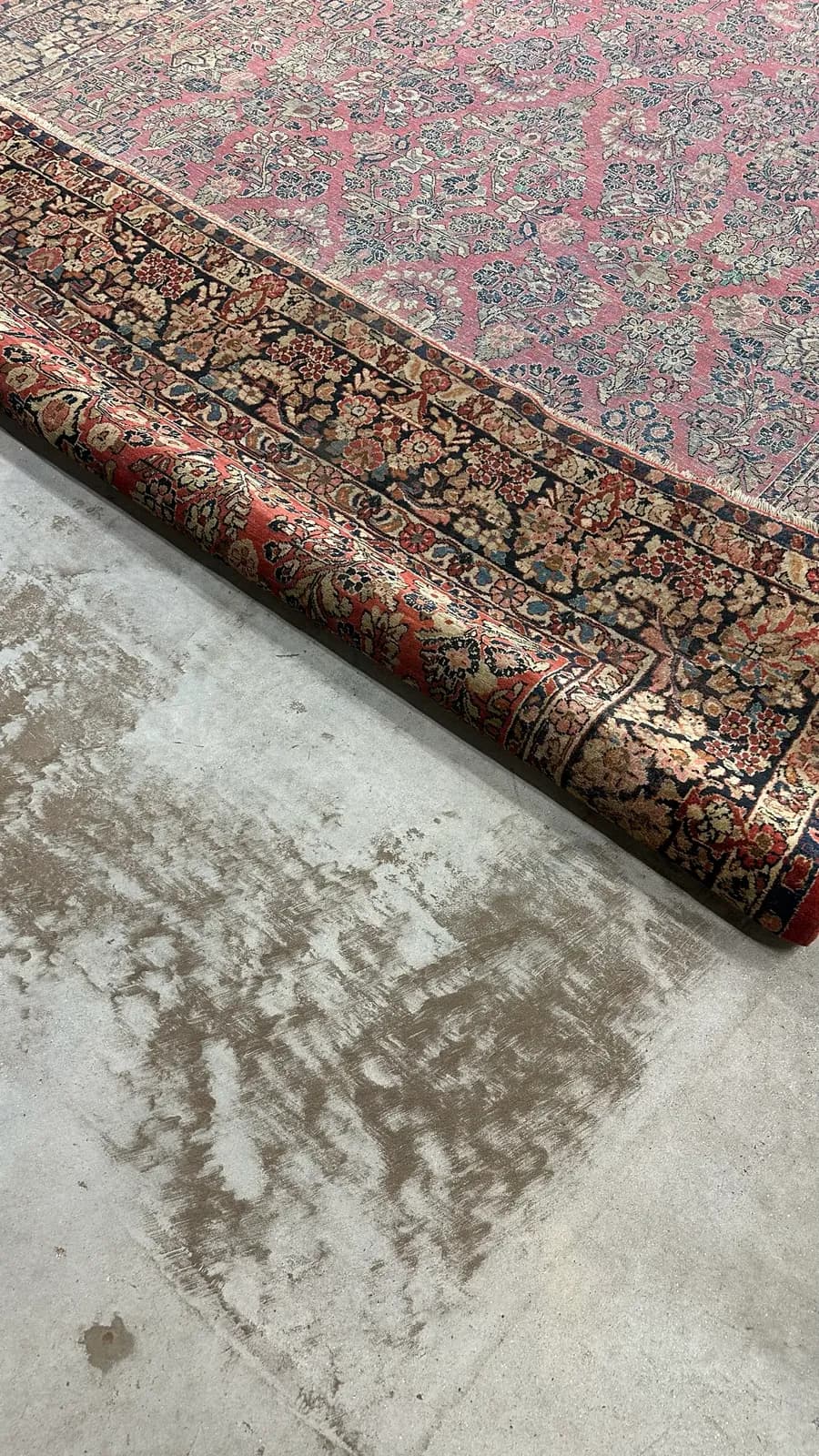
Dusting & pre-spot treatment
Before any water, embedded dry soil is driven out mechanically with compressed air and controlled agitation while the rug lies face-down over a grid. A single soiled rug can hold several pounds of fine grit deep in the foundation. Once the grit is out, individual spots and stains are pre-treated so the wash itself can lift them.
Why it matters: most of the wear in a hand-knotted rug is abrasion — sharp grit sawing against wool fibers every time someone walks across it. Removing that grit dry, before it turns to abrasive mud in water, is the step that actually preserves the pile.
The wrong method: a household vacuum only lifts surface lint. Wet-cleaning over trapped grit grinds it deeper and accelerates the very wear you paid to prevent.
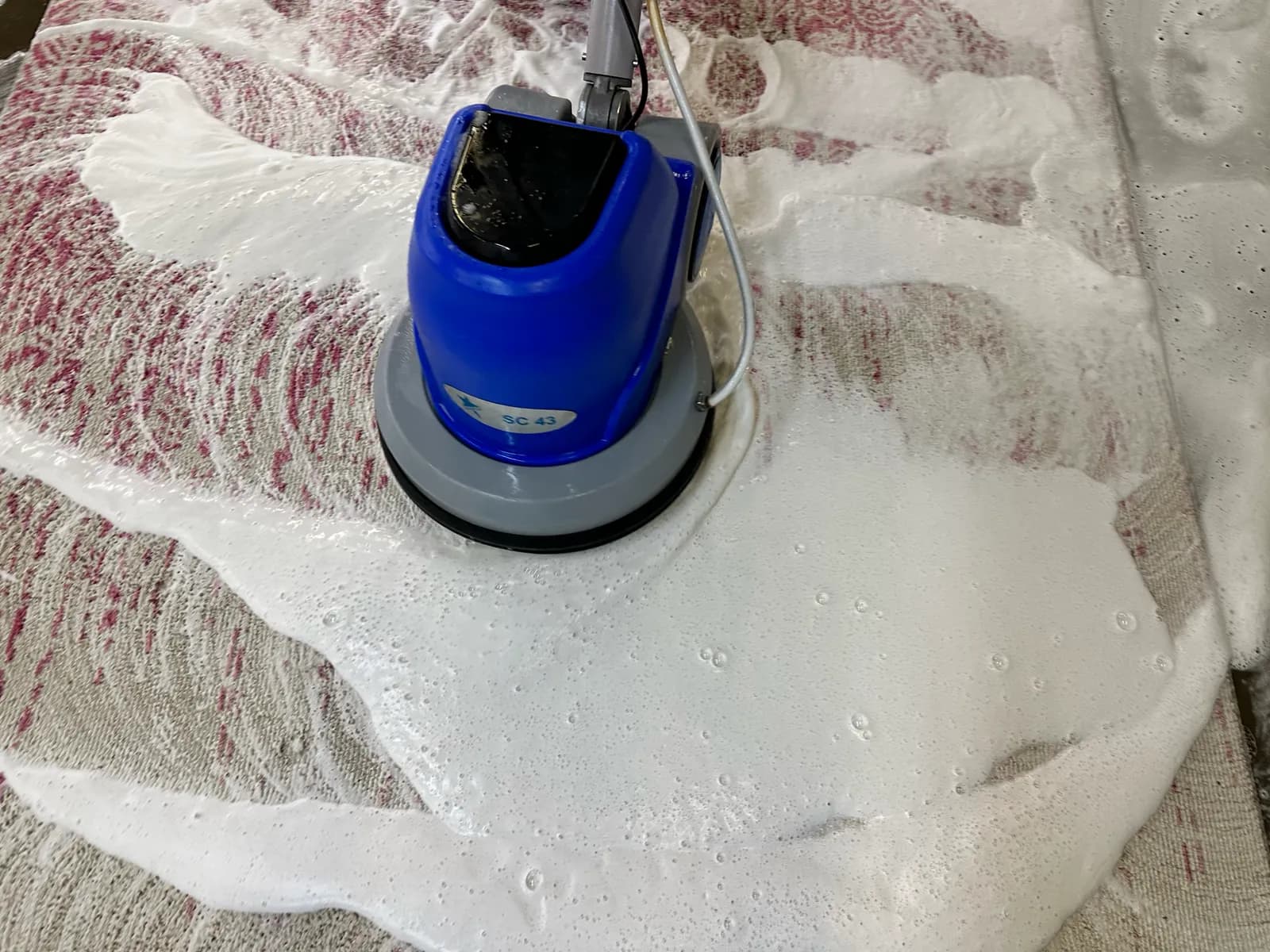
Hand washing — pit wash or flat wash
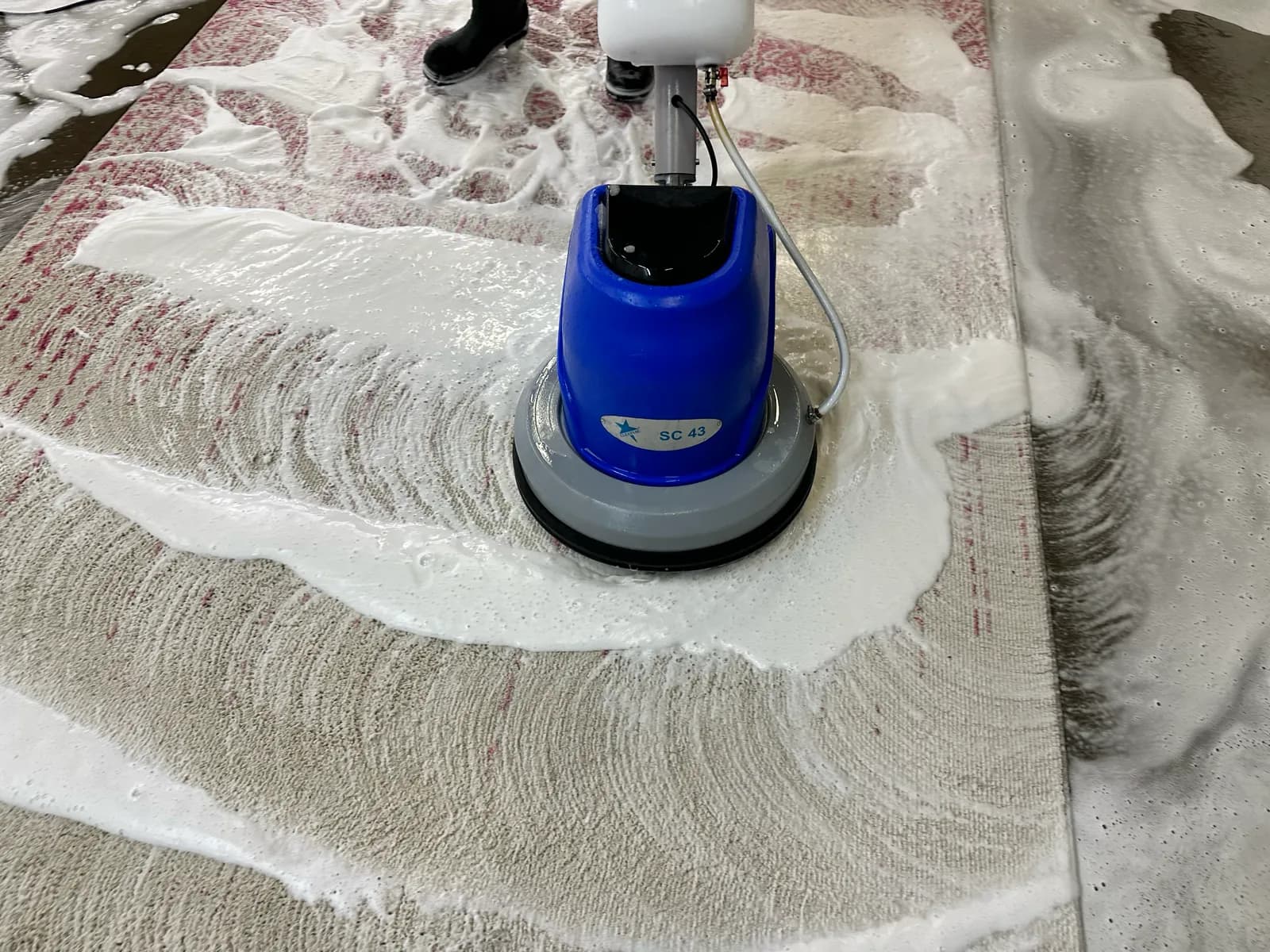
We use two wash methods and choose per rug. Sturdy wool rugs go into the pit wash — full immersion, so the bath reaches the foundation. Silk, fragile, and dye-bleed-risk rugs are flat-washed instead, worked by hand on the floor without immersion. Either way the chemistry is non-ionic and pH-neutral, matched to the fiber and dye; water is kept cool — never above roughly 85°F for wool — and the pile is worked in the direction of the nap.
Why it matters: wool and silk are protein fibers. Heat felts and shrinks them, and alkaline detergent strips the lanolin that gives wool its luster and resilience. Cool water and neutral chemistry clean the rug without damaging the fiber — the same principle museum textile conservators work by.
The wrong method: hot-water extraction at high alkalinity is built for synthetic wall-to-wall carpet. On a hand-knotted wool rug it causes felting, dulling, and dye migration that no amount of re-cleaning reverses.
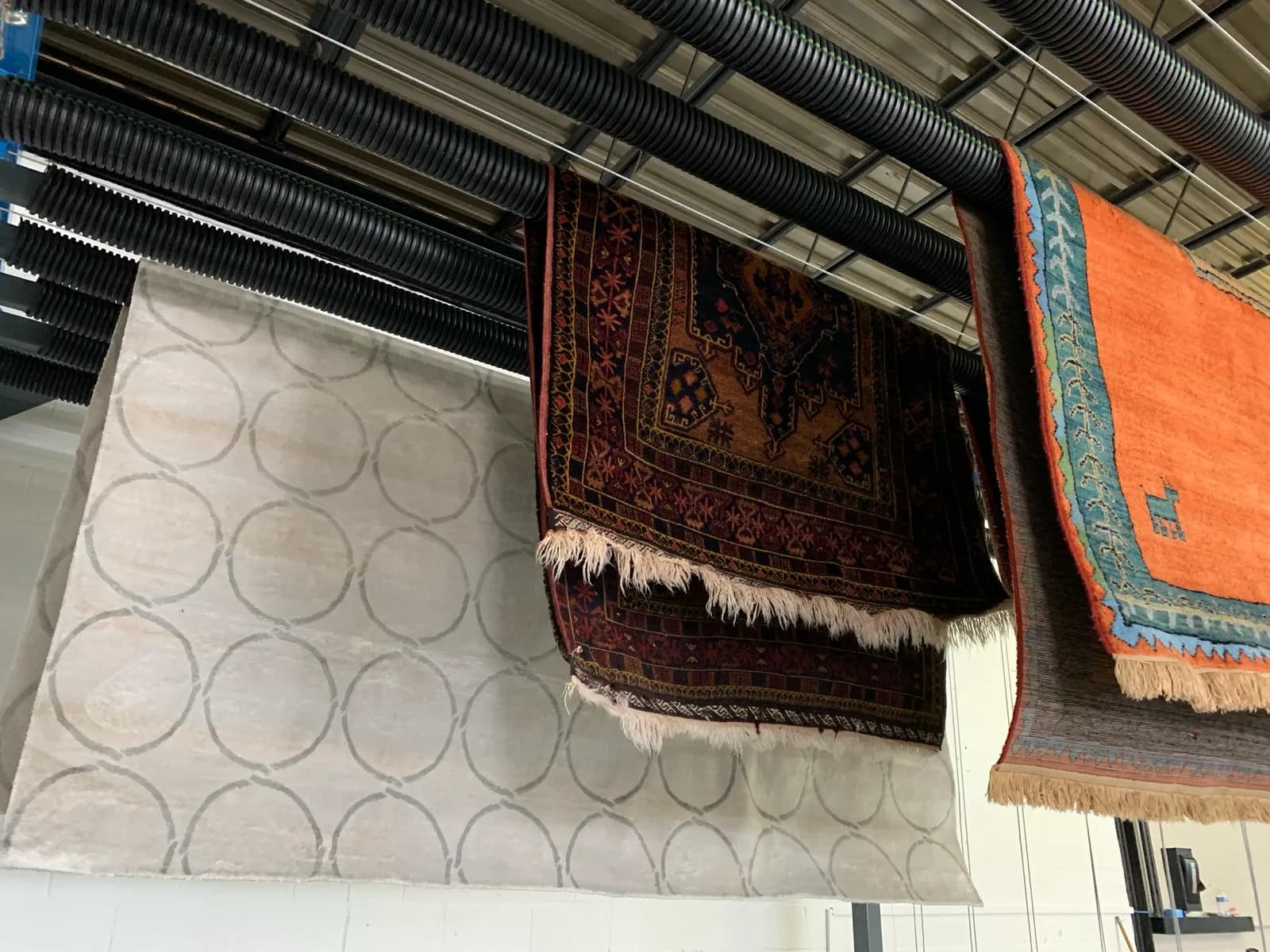
Rinse, extraction & controlled drying
The rug is rinsed until the water runs clear, then excess water is gently extracted. It is dried flat — out of direct sun — on racks with managed airflow, typically over 48 to 72 hours depending on thickness and fiber. No tumble dryers, no heat lamps, no hanging a saturated rug over a rail; silk in particular is never hung wet.
Why it matters: a wet foundation under tension distorts. Dry a rug flat and even and it returns to square; dry it fast or hung and the cotton warps lift, the rug goes out of shape, and trapped moisture invites mildew. Patience here protects the geometry of the weave.
The wrong method: same-day "dry in an hour" services trap moisture in the foundation. Within a week the homeowner smells mildew and the rug has cupped at the edges.
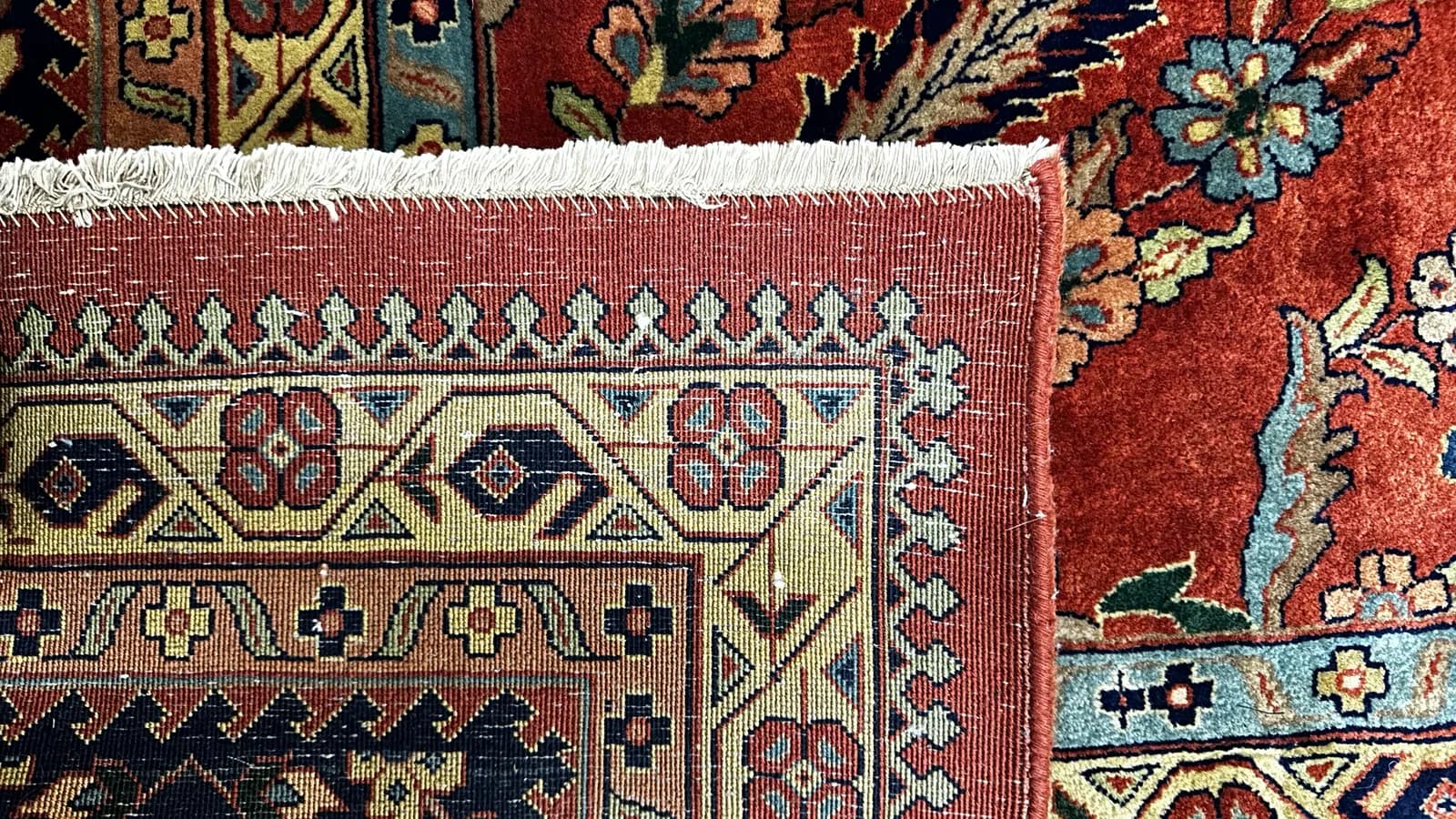
Fringe, final inspection & delivery
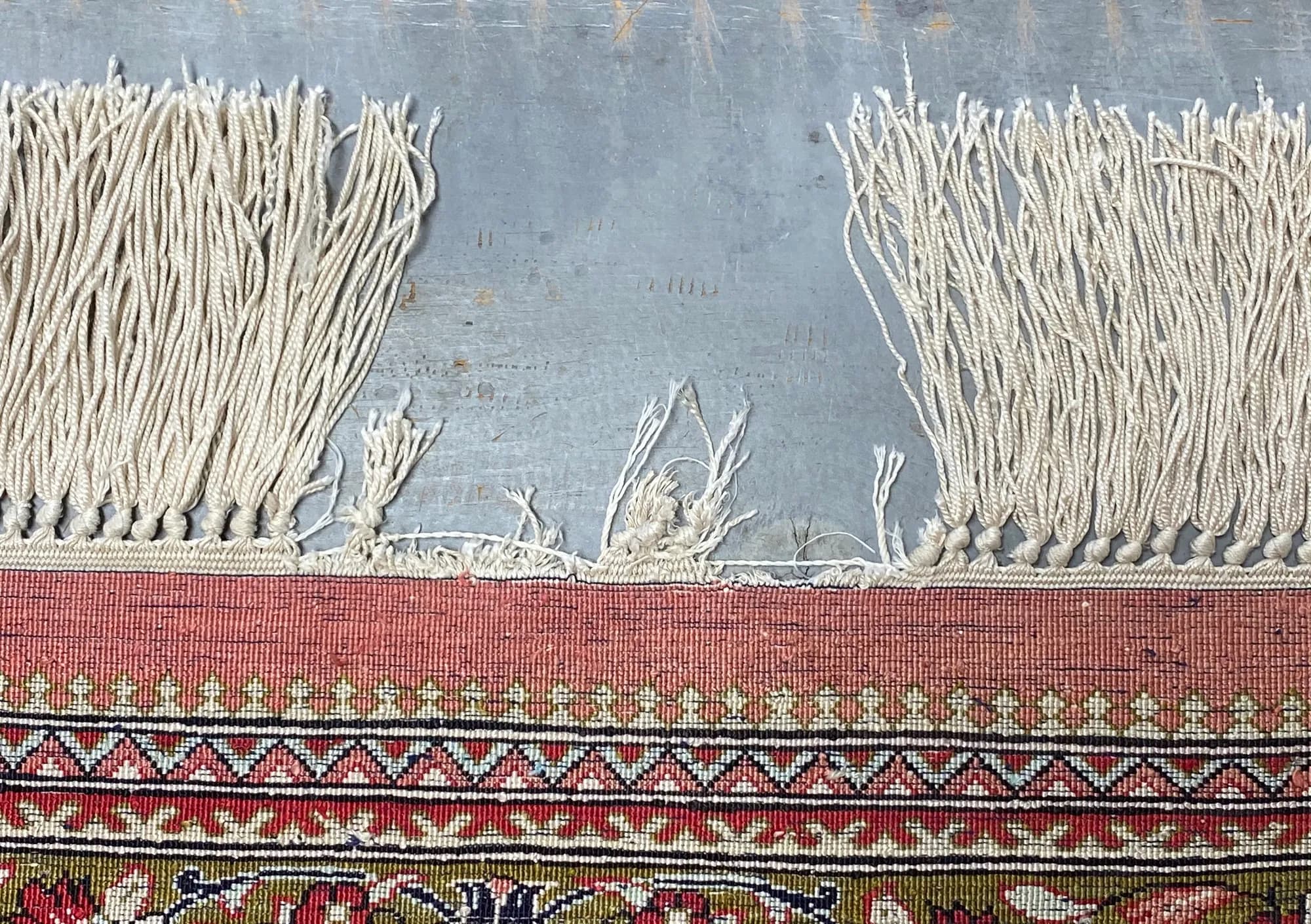
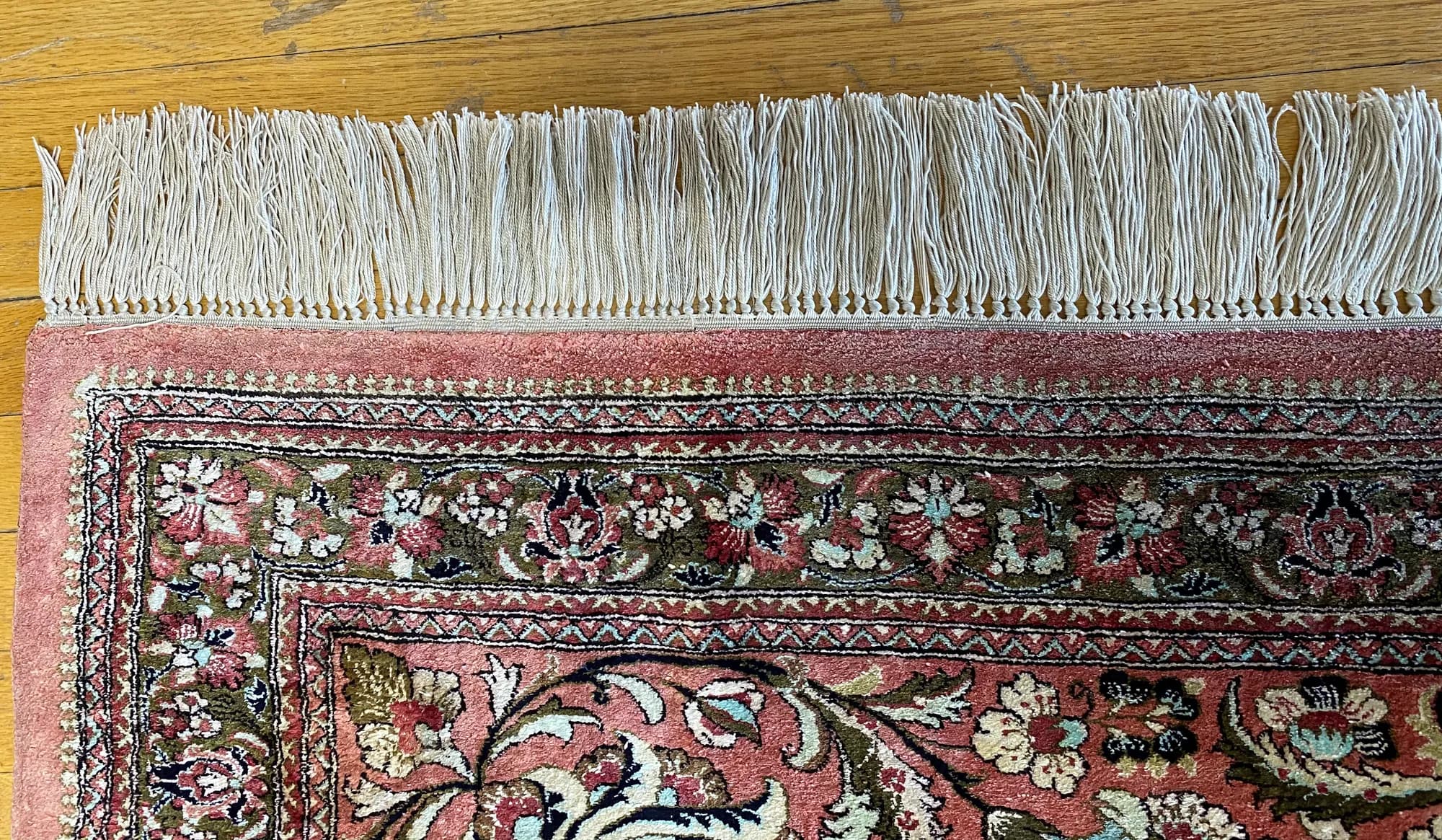
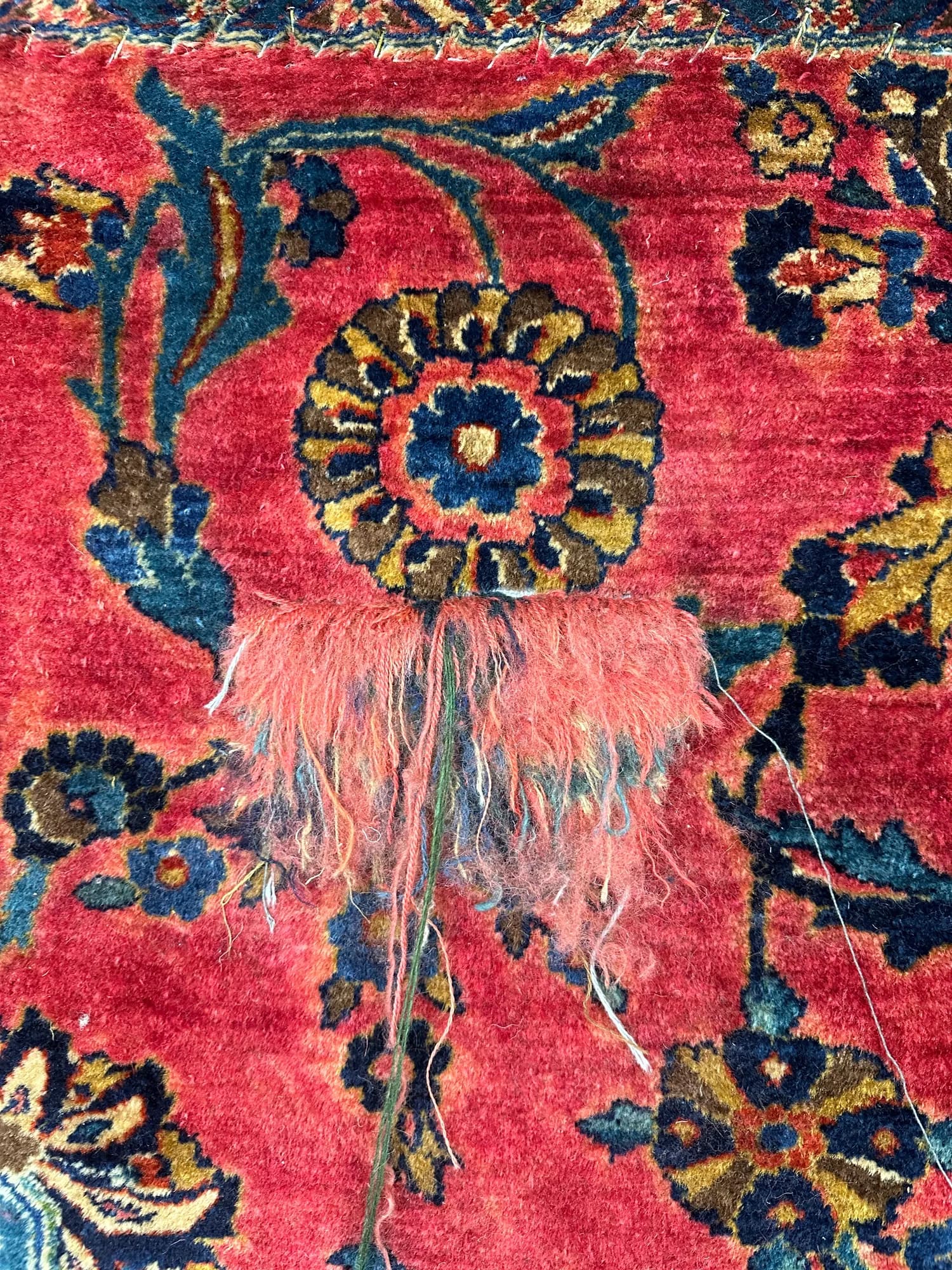
Once dry, the fringes are combed straight and the pile is groomed to lie correctly. In final quality control every rug is moisture-metered and must read under 12% before it is wrapped for delivery, and it is checked against its intake photographs. You receive the rug back with that photo record, and we flag anything we noticed — a loose selvage, early moth activity, a thin spot — so nothing is a surprise.
Why it matters: the final pass is also a free condition report from a conservator. Catching a fraying edge or a moth trail early is the difference between a $120 repair and a $1,200 reweave.
The wrong method: a rug returned rolled, damp, and un-inspected hides the problems that cleaning should have surfaced.
“The rugs we see with irreversible steam damage almost always arrived looking clean on the surface. The damage was underneath, in the foundation, from heat and pressure no one can undo.”
Want a number before you call? Use our rug cleaning cost calculator to estimate your job by fiber type and dimensions, or read our complete rug care guide for everything that happens between professional cleanings.
Hand-washing vs. steam cleaning: what actually happens to the rug
Most of the rug damage we see traces back to the wrong method being applied to a hand-knotted piece, not to age or ordinary wear. The difference between our process and a typical steam or hot-water extraction pass comes down to three variables.
Based on the process described above and the equipment standard to volume carpet cleaning.
| Factor | Ahmadi Rug | Steam / hot-water extraction |
|---|---|---|
| Water temperature | Cool — never above roughly 85°F for wool | Hot — typically 150°F+ |
| Chemistry | pH-neutral, non-ionic, matched to fiber and dye | Alkaline detergent built for synthetic carpet |
| Dye-stability test before washing | Every rug, every color | Not standard practice |
| Dry soil removed before water touches the pile | Yes — compressed air, face-down agitation | No — soil is wet down first |
| How the rug is washed | Off the floor — pit wash for sturdy wool, flat wash for silk and fragile rugs | In place, on the floor |
| Drying | Flat on racks, 48–72 hours, controlled airflow | Left damp in place, or same-day "dry" |
Heat and alkalinity are the two variables that matter most. Wool felts — the fiber scales lock together into a matted, coarse pile that cannot be reversed — when heat and agitation combine with a high-pH detergent. Natural dyes are similarly sensitive: the mordants that bind them to the fiber hold best in a mildly acidic to neutral range, and an alkaline bath is exactly the condition that lets one color migrate into another.
What makes a hand-knotted rug different from every other textile in your home
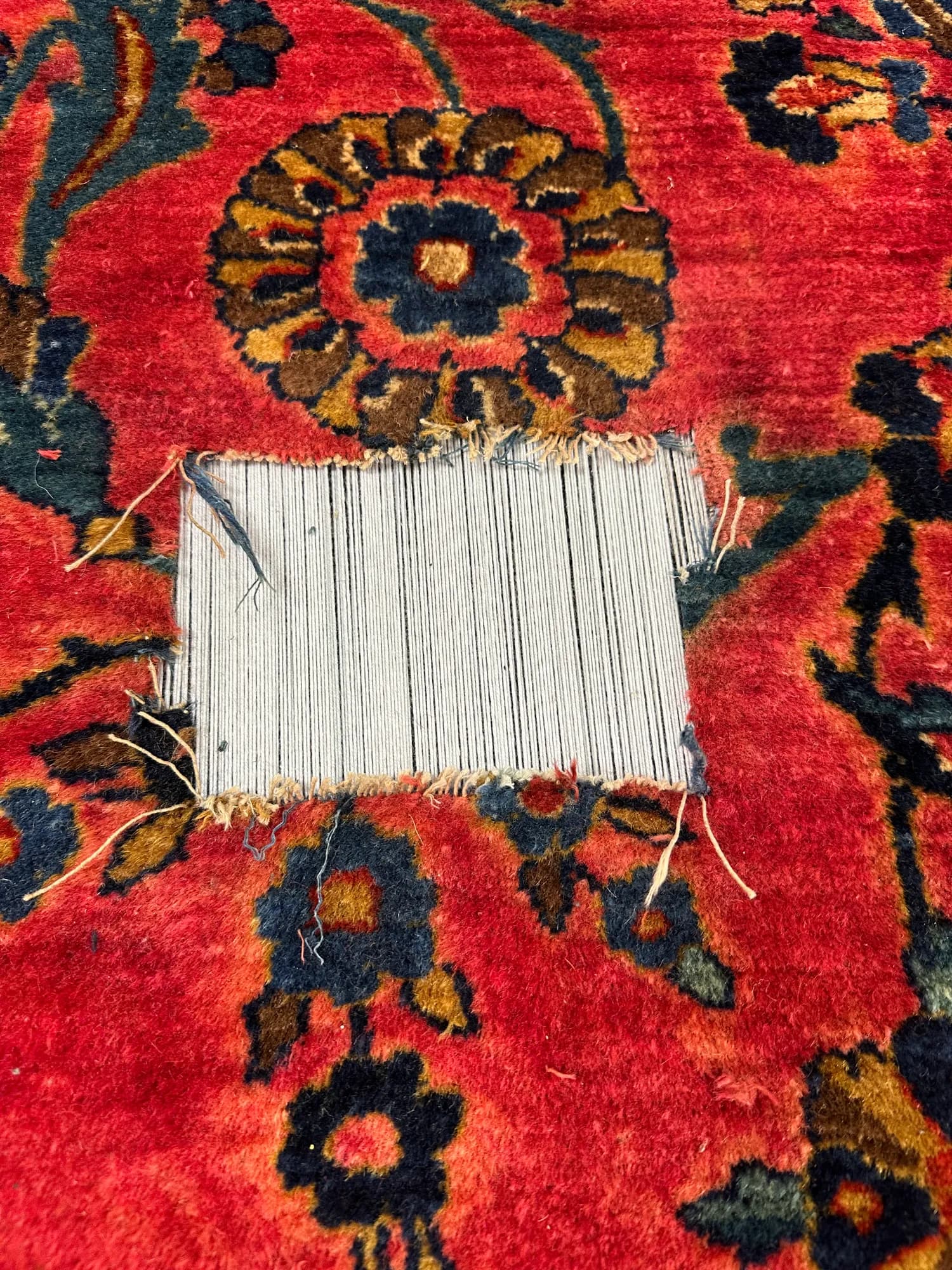
A hand-knotted Persian or Oriental rug is not a floor covering in the way wall-to-wall carpet is. Every knot — anywhere from around a hundred to well over a thousand per square inch, depending on the weave — is individually tied by hand around the warp threads that, together with the weft, form the rug’s foundation. That structure is why the process above looks the way it does.
Wool is hygroscopic — it can absorb roughly a third of its own weight in water before it feels wet to the touch — which is part of why fine, dry soil settles so deep into the pile and why surface vacuuming never reaches it. That embedded grit acts as an abrasive on the fiber every time the rug is walked on, which is the reason dry soil extraction happens before a drop of water is used.
Traditional natural dyes — madder root for reds, pomegranate rind for golds and yellows, indigo for blues and greens — are bonded to the fiber through mordanting rather than sitting on the surface the way many synthetic dyes do. That bond is durable under normal use but sensitive to pH, which is exactly why we test every color before washing rather than assuming it will hold.
From the workshop
Case history
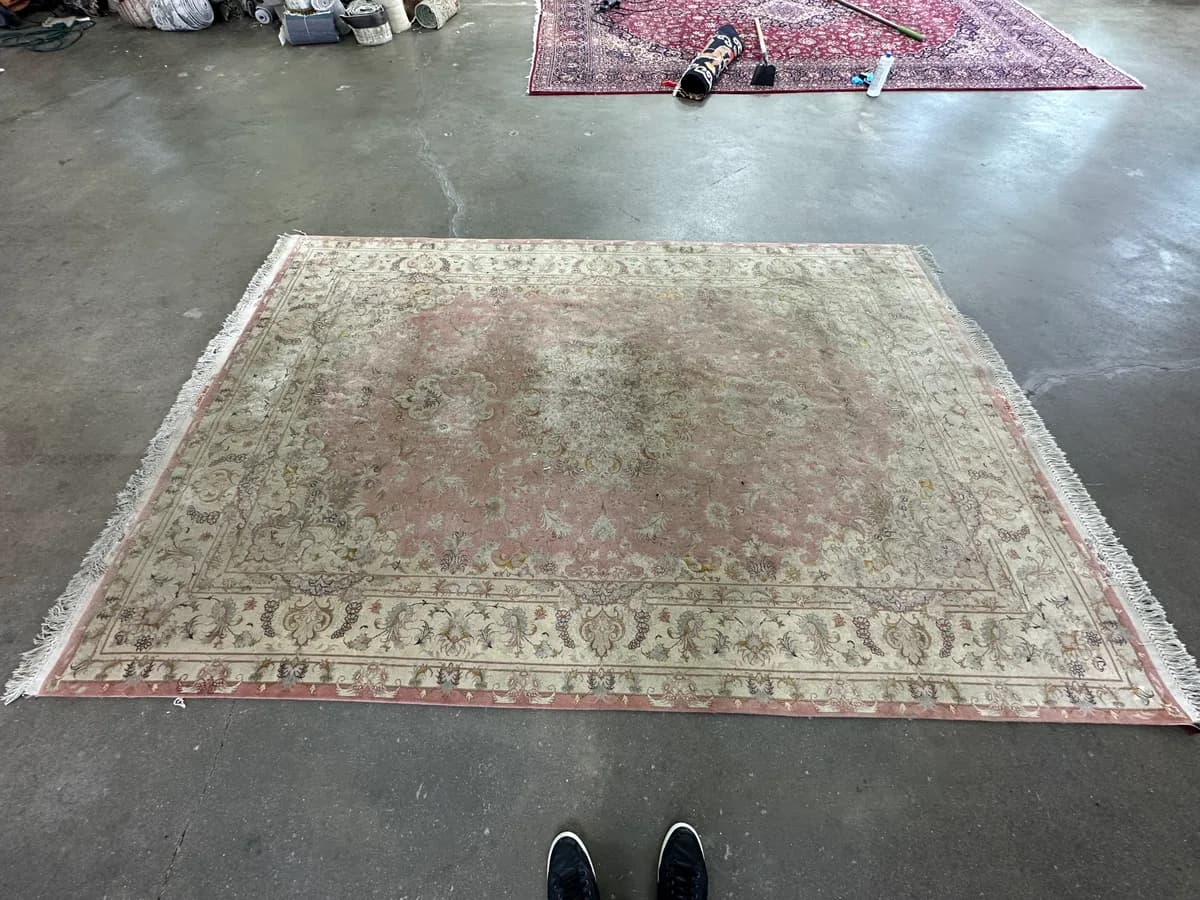
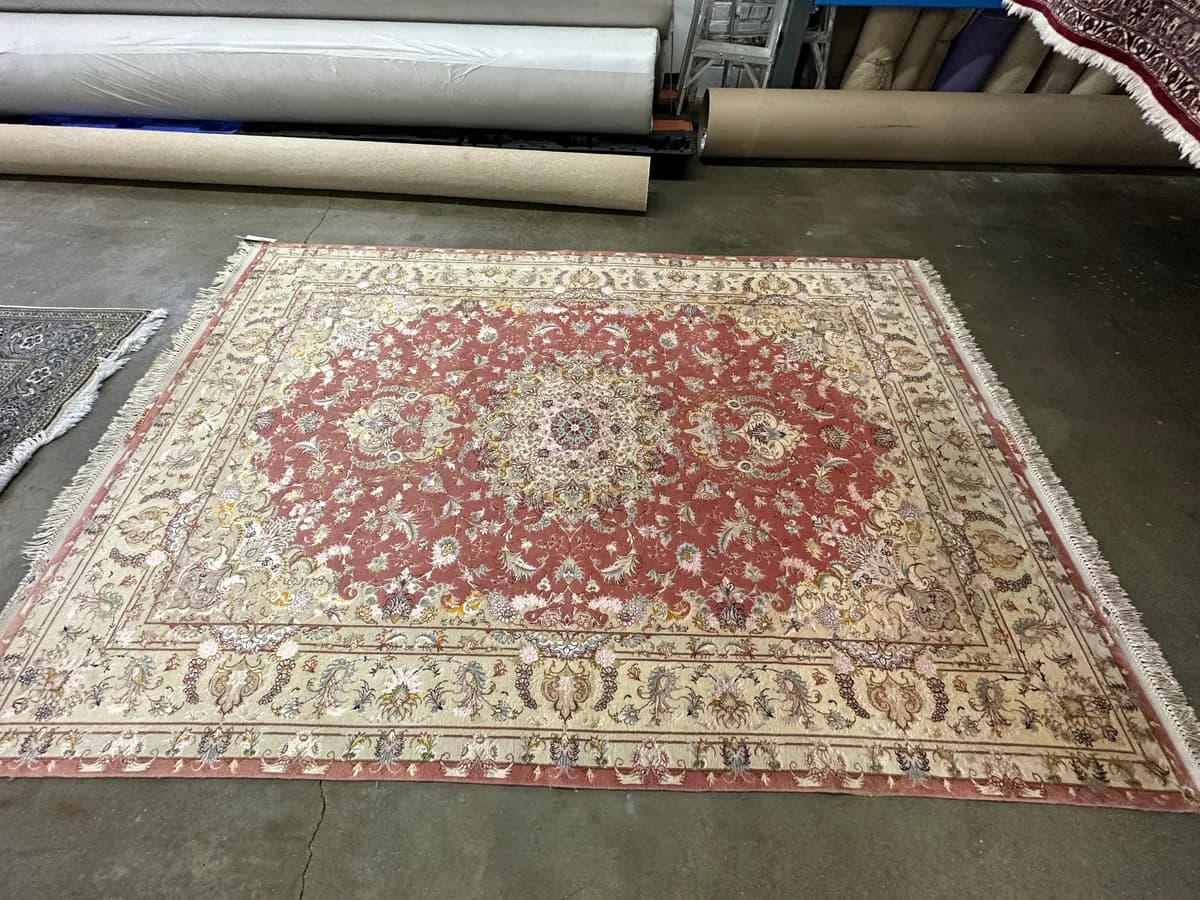
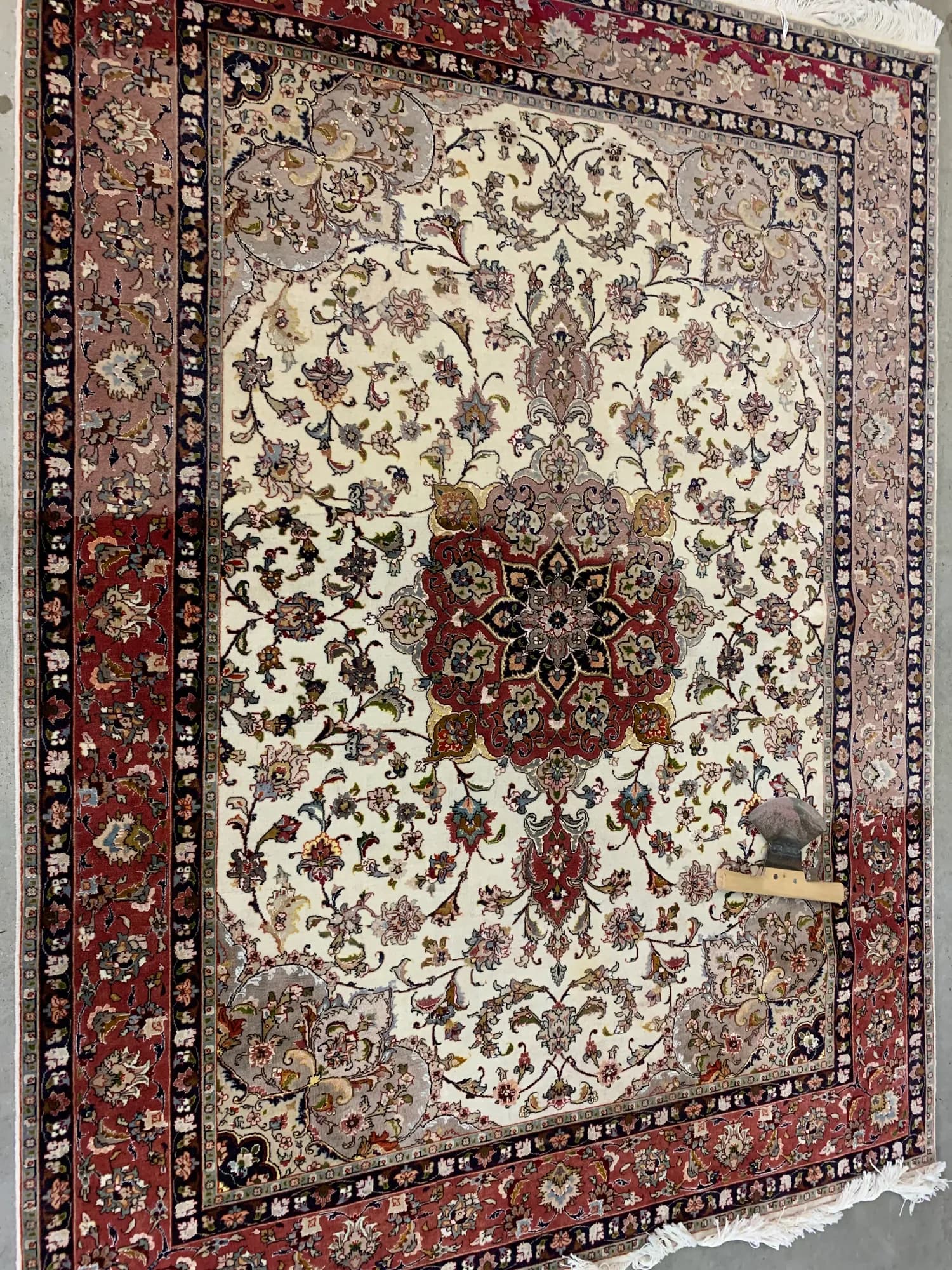
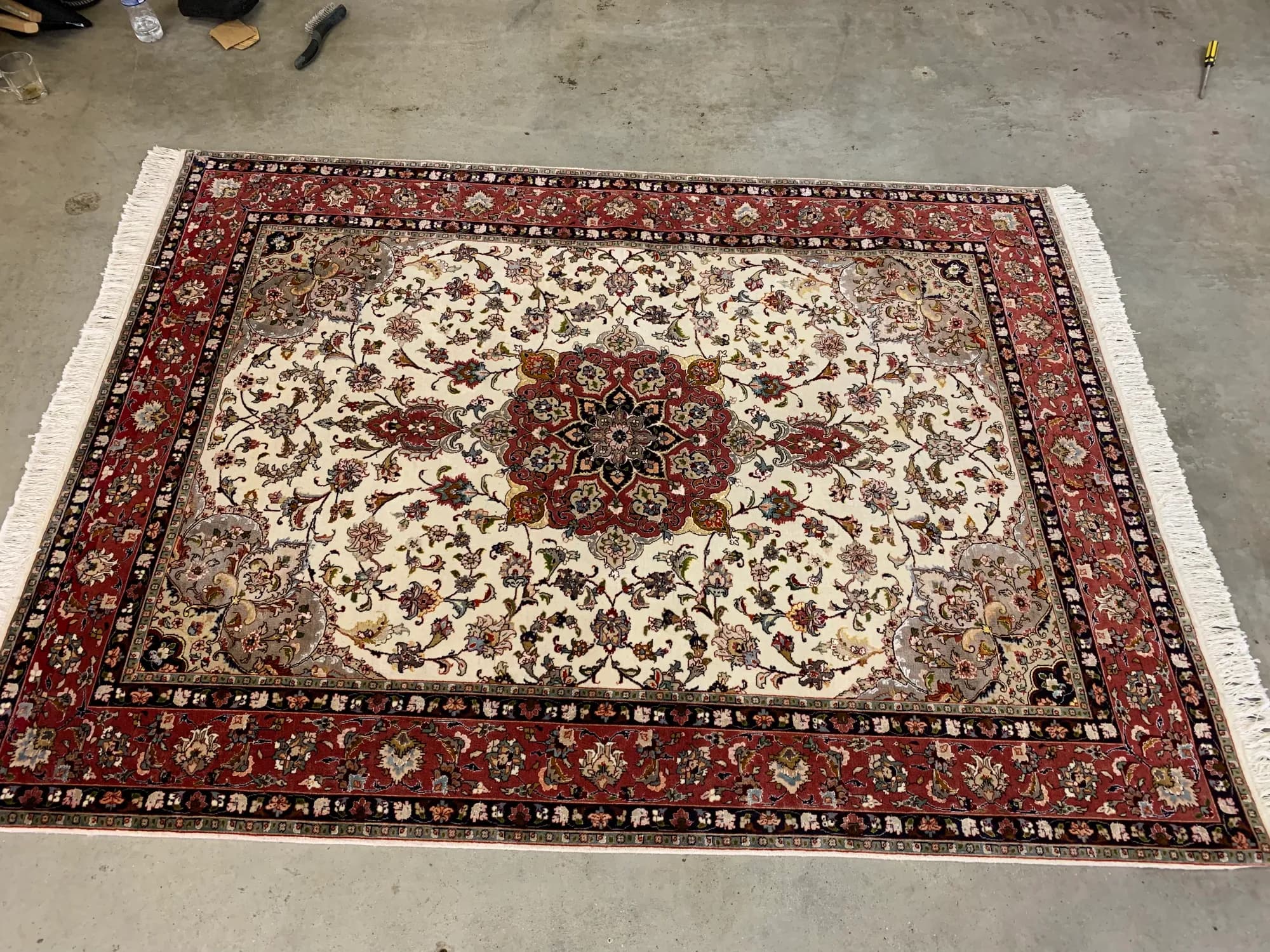
9×12 Tabriz — Water Damage & Color Bleed Restoration
- The rug
- 9×12 Persian Tabriz, hand-knotted.
- Condition at intake
- A water event had saturated the rug over an extended period. Prolonged moisture contact broke the mordant bond on several color areas, allowing pigment to migrate outward across roughly a third of the field.
- Treatment
- Full-immersion wash to remove embedded soil and lift surface bleed deposits. Targeted color-migration treatment — neutralising the chemistry driving continued dye movement — before color restoration returned the affected areas to their original density. Flat-dried over 60+ hours.
- Result
- Color bleed fully resolved. Affected areas restored to original color density. Rug returned to active use.