
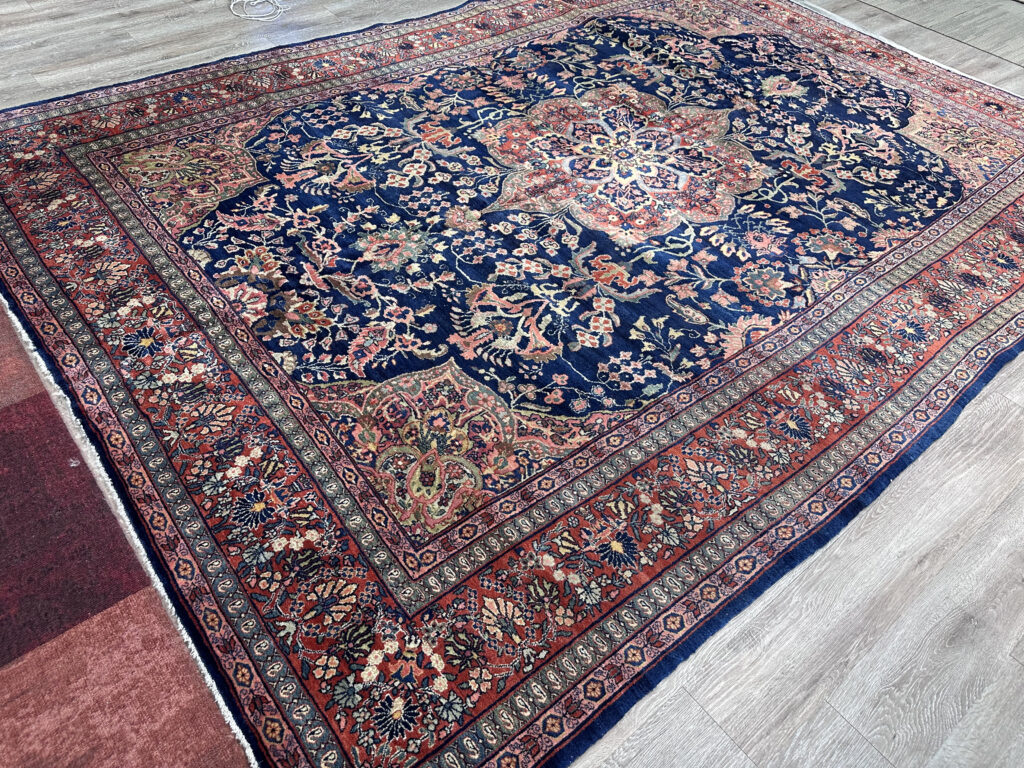
Your Oriental rug is more than a floor covering—it’s a hand-knotted archive of culture, craftsmanship, and generational artistry. Whether you inherited a century-old Tabriz or invested in a silk Qum from a Michigan Avenue gallery, protecting that investment starts with understanding how Chicago’s unique climate and urban environment affect fine textiles. As specialists trusted by institutions including the Louvre and the British Museum, we’ve seen what proper care preserves—and what neglect destroys. This ultimate guide to rug cleaning in Chicago will give you the knowledge to keep your Oriental and Persian rugs vibrant for decades to come.
Why Chicago’s Climate Is Uniquely Hard on Oriental Rugs
Chicago homeowners face a combination of environmental factors that few other cities can match. Lake-effect humidity in summer can push indoor moisture levels above 60%, creating ideal conditions for mold and mildew to colonize the cotton foundations of hand-knotted rugs. Then winter arrives, and forced-air heating drops humidity below 25%, causing wool and silk fibers to become brittle and crack.
Add road salt tracked in from November through April, and you have a corrosive mineral compound grinding into knots every time someone walks across your foyer. Salt doesn’t just sit on the surface—it migrates deep into the pile, where it attracts moisture and accelerates fiber degradation from the inside out.
For homeowners across the North Shore—Winnetka, Wilmette, Glencoe, Highland Park—proximity to Lake Michigan intensifies these humidity swings. And in urban neighborhoods like Lincoln Park and the Gold Coast, construction dust and particulate pollution settle into rugs at rates significantly higher than suburban homes. Understanding these local threats is the first step toward effective Oriental rug repair and prevention.
The Hidden Damage You Can’t See: What’s Living in Your Rug
A well-made Oriental rug can hold up to a pound of dirt per square foot before it even looks dirty. That’s not a testament to durability—it’s a warning. Embedded grit acts like sandpaper at the base of every knot, slowly sawing through foundation threads with every footstep. Over a period of years, this invisible abrasion thins the pile unevenly and weakens the structural integrity of the entire piece.
Beyond dirt, Chicago homes commonly harbor dust mites, pet dander, and pollen that settle deep into rug fibers. These allergens aren’t removed by regular vacuuming—they require full-immersion washing to extract. Moth larvae present another invisible threat, particularly in rugs stored in closets, under furniture, or in low-traffic areas. We regularly receive rugs from Hinsdale and Northbrook homes where moth damage went undetected for months because it started on the underside.
The lesson: if your rug looks clean, it probably isn’t. Professional inspection every 12 to 18 months catches problems before they become expensive restorations.
Professional Rug Cleaning vs. DIY: What Chicago Homeowners Need to Know
The internet is full of DIY rug cleaning advice, and most of it will damage your rug. Here’s what we’ve learned from over three decades of Persian rug restoration work—much of it repairing well-intentioned DIY attempts.
What to Never Do at Home
- Steam cleaning or hot water extraction: These methods are designed for wall-to-wall carpet, not hand-knotted rugs. High heat can cause dye migration (colors bleeding into each other), shrink cotton foundations, and set protein-based stains permanently.
- Retail spot cleaners: Most contain optical brighteners and harsh surfactants that strip natural lanolin from wool fibers. The rug may look brighter initially, but you’ve removed its natural protection against soiling and wear.
- Rubbing or scrubbing stains: This pushes the stain deeper and distorts the pile direction, creating a visible patch that no amount of brushing will fix.
- Baking soda saturation: A popular internet tip that leaves alkaline residue deep in the foundation, attracting more dirt and potentially causing dry rot over time.
What You Can Safely Do at Home
- Vacuum regularly: Use a canister vacuum without a beater bar. Vacuum the back of the rug twice a year to dislodge embedded grit.
- Rotate every six months: This distributes foot traffic and sun exposure evenly, preventing unilateral wear patterns.
- Blot spills immediately: Use a clean white cloth and work from the outside of the spill inward. Cold water only. Then call a professional.
- Use quality rug pads: A proper pad prevents slipping, reduces pile compression, and allows air circulation underneath—critical for preventing mold in Chicago’s humid summers.
Professional rug cleaning in Chicago should involve full-immersion hand washing—the same method used for centuries in the regions where these rugs were made. At our Skokie facility, every rug is dusted, tested for colorfastness, hand-washed with pH-balanced solutions, rinsed with purified water, and dried in a controlled environment. No shortcuts, no machines grinding against your knots.
When Repair Becomes Restoration: Recognizing the Warning Signs
There’s an important distinction between rug repair and full restoration, and knowing when you’ve crossed that line can save you thousands of dollars. Early intervention is always less expensive than deferred maintenance.
Signs you need repair (act within weeks):
- Fringe that’s fraying, thinning, or detaching from the rug body
- Selvage (side binding) that’s coming loose or missing sections
- Small holes or worn spots where foundation threads are visible
- Curling or rippling edges that won’t lay flat
- Minor moth damage limited to small areas
Signs you need restoration (act now):
- Large areas of missing pile exposing bare foundation
- Structural tears or splits in the foundation
- Extensive water damage with color bleeding or mildew staining
- Significant moth damage across multiple areas
- Sun fading that’s altered the original color palette
Our Oriental rug repair and restoration work is performed entirely in-house at our Skokie workshop by artisans trained in traditional techniques. We never outsource, which means your rug stays under our quality control from the moment we pick it up to the moment we return it. Every piece is photographed upon arrival and at each stage of the process—a full chain-of-custody record that gives you visibility and peace of mind.
Seasonal Care Calendar: A Year-Round Plan for Chicago Rug Owners
Based on three decades of working with Chicago-area homeowners, here’s the seasonal maintenance schedule we recommend:
Spring (March–May)
This is the ideal time for professional cleaning. Winter salt and grit have been accumulating for months, and cleaning now prevents that residue from bonding with fibers during summer humidity. Schedule your annual professional wash. Inspect for moth activity—larvae become active as temperatures rise. Move rugs away from direct sunlight as days lengthen.
Summer (June–August)
Monitor indoor humidity and keep it between 40% and 55%. If you have rugs in a basement or garden-level unit, consider a dehumidifier. This is a good season for any repair work, as controlled drying conditions help set new knots and bindings properly.
Fall (September–November)
Rotate all rugs 180 degrees. Inspect padding for compression and replace if it’s lost its cushion. If you’re storing any rugs for winter, have them professionally cleaned first—never store a dirty rug. We provide acid-free wrapping and climate-controlled storage recommendations for clients across Evanston, Lake Forest, and the greater North Shore.
Winter (December–February)
Place heavy-duty mats at every entrance to catch salt. Remove boots and shoes at the door whenever possible. Run a humidifier to keep indoor levels above 30%—your rugs, hardwood floors, and sinuses will all benefit. Vacuum more frequently during this season, as dry air causes fibers to release more particulate.
Protecting Your Investment: Insurance, Appraisal, and Documentation
Fine Oriental rugs appreciate in value when properly maintained, but most homeowners’ insurance policies cover them only as general household contents—often at a fraction of their actual worth. We recommend these steps to protect your collection:
- Get a professional appraisal: Documented replacement value is essential for insurance riders. Appraisals should be updated every three to five years, as the market for antique and semi-antique rugs shifts significantly.
- Photograph your collection: Document each rug with full-face photos, detail shots of any unique features or existing wear, and images of the back. Store these digitally and off-site.
- Keep cleaning and repair records: A documented maintenance history increases both insurable value and resale value. Every service we perform comes with a detailed condition report and photographic record.
- Consider a fine arts rider: For rugs valued above $5,000, a scheduled personal property endorsement provides agreed-value coverage that a standard policy won’t match.
This kind of documentation becomes especially important for estate planning and transfers. We work with families across the Chicago area who’ve entrusted us with rugs through multiple generations—proper records ensure those heirlooms are valued correctly no matter what comes next.
How to Choose a Rug Care Specialist in Chicago
Not all rug cleaners are equipped to handle hand-knotted Oriental and Persian rugs. Here’s what to look for when choosing a provider for Persian rug restoration or routine cleaning:
- Dedicated facility: Your rug should be cleaned in a purpose-built workshop, not in the back of a carpet cleaning van. Ask to visit the facility before committing.
- Hand-washing capability: Machine washing and dry cleaning will damage fine rugs. Insist on full-immersion hand washing with pH-balanced, fiber-appropriate solutions.
- In-house repair artisans: If a company outsources its repair work, you lose quality control and accountability. Make sure the people washing your rug and the people repairing it work under the same roof.
- IICRC certification: The Institute of Inspection, Cleaning and Restoration Certification is the industry standard. It’s the minimum credential you should expect.
- Transparent process: You should receive intake photos, a written condition assessment, and a detailed estimate before any work begins. No surprises.
- Insured transport: Your rug may be worth thousands. Make sure it’s covered from the moment it leaves your home to the moment it returns. We provide fully insured pickup and delivery across Chicago and the entire North Shore.
Your Rug Deserves Museum-Level Care
At Ahmadi Rug, we apply the same techniques and standards trusted by the Louvre and the British Museum to every rug that enters our Skokie workshop—whether it’s a $500 cleaning or a $5,000 restoration. With over 30 years of experience serving Chicago homeowners and a 0% complaint rate that we take very seriously, we believe every handmade rug deserves expert attention.
Our process is simple: we pick up your rug with fully insured transport anywhere in Chicago or the North Shore, photograph and assess it at intake, perform all work in-house under direct quality supervision, and return it to you looking its best. No outsourcing, no shortcuts, no surprises.
Ready to give your Oriental rug the care it deserves? Call us at (847) 779-3288 or email info@ahmadirug.com to schedule a free consultation. We offer complimentary pickup across Chicago, Skokie, Evanston, Wilmette, Winnetka, Lake Forest, and the surrounding area. You can also visit our workshop at 7300 N. Lawndale Ave, Skokie, IL 60076—we love showing clients where the work happens.
